“I WOULD GIVE ANYTHING FOR ONE MORE DAY WITH MY CHILDREN” — ROB BURROW’S HEARTBREAKING FINAL WISH AND THE LOVE STORY THAT NEVER ENDED
He had faced some of the toughest opponents in rugby league, won championship after championship and earned the admiration of thousands of supporters.
But for Rob Burrow, the greatest battle of his life was one he could never win.
The former Leeds Rhinos rugby league star died on June 2, 2024, aged just 41, after a courageous battle with motor neurone disease (MND).
Behind the sporting achievements was a devoted husband and father of three who wanted nothing more than to spend more time with the people he loved.
His wife, Lindsey, and their children, Macy, Maya and Jackson, became the center of his world as his illness gradually took away his ability to move, speak and perform even the simplest everyday tasks.
Yet even when his voice was gone, Rob found another way to communicate.
Using technology controlled entirely through his eyes, he continued telling his family how much they meant to him — and prepared messages that would allow his children to hear from their father long after he was gone.
 A LOVE STORY THAT BEGAN WHEN THEY WERE TEENAGERS
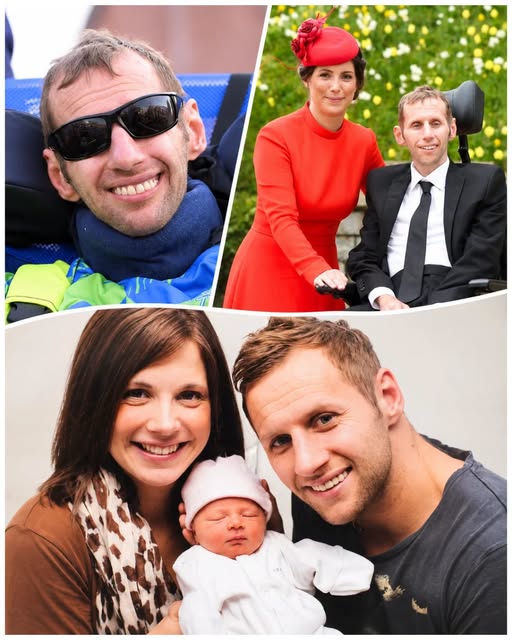
Rob and Lindsey’s relationship began when they were teenagers.
They had known each other since they were young, and their relationship developed into a lifelong partnership.
Lindsey stood beside Rob throughout his rugby career, sharing the excitement of his sporting achievements and building a family together.
The couple eventually welcomed three children: Macy, Maya and Jackson.
For Rob, becoming a father was one of the greatest joys of his life.
He often spoke about how much his family meant to him, and his greatest fear after receiving his diagnosis was the impact the illness would have on Lindsey and the children.
When doctors confirmed that he had motor neurone disease in December 2019, the family’s future changed dramatically.
 THE DIAGNOSIS THAT CHANGED EVERYTHING
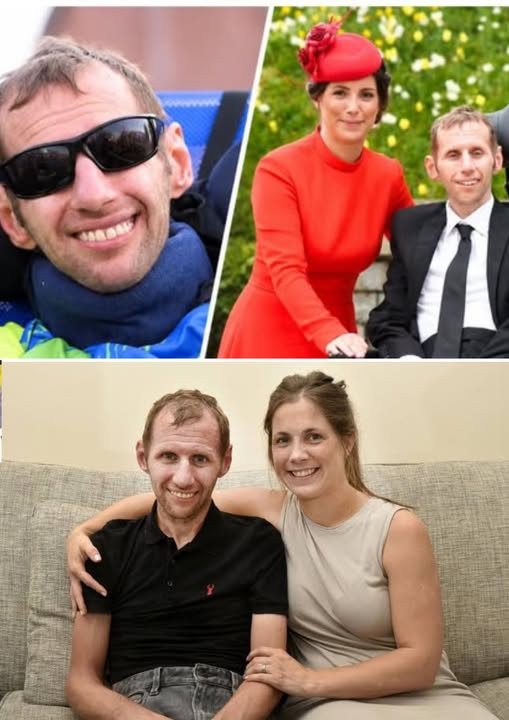
Rob was diagnosed with MND at the age of 37, two years after retiring from professional rugby.
Motor neurone disease is a progressive neurological condition that damages the nerves responsible for controlling muscles.
As the disease advances, people can gradually lose the ability to walk, speak, swallow and breathe independently.
There is currently no cure.
For someone whose professional life had revolved around physical strength, speed and movement, the diagnosis was particularly devastating.
Rob had spent 17 years playing for Leeds Rhinos, becoming one of the club’s most celebrated players.
He made 493 appearances for the team, won eight Super League titles and helped establish himself as a rugby league legend.
But the disease began taking away the physical abilities that had defined so much of his life.
Rather than retreat from public life, however, Rob made a decision that would change the way thousands of people understood MND.
He would use his story to help others.
LINDSEY BECAME HIS GREATEST SOURCE OF STRENGTH
Throughout Rob’s illness, Lindsey remained by his side.
She became his caregiver while continuing to raise their three children and manage the enormous emotional and practical challenges facing the family.
As Rob’s condition deteriorated, everyday activities became increasingly difficult.
Lindsey helped him with personal care, mobility and communication, often putting her own needs aside to make sure her husband was comfortable.
Rob openly acknowledged how much she did for him.
In interviews, he described Lindsey as an extraordinary wife and mother, praising her patience and devotion.
He once explained that she had never signed up for the life that MND had forced upon them, yet she continued to stand beside him day and night.
Their relationship became an example of extraordinary commitment during one of life’s most difficult circumstances.
WHEN HIS VOICE DISAPPEARED, HIS EYES STILL SPOKE
One of the most remarkable parts of Rob’s final years was the technology that allowed him to continue communicating.
As MND affected his ability to speak and move, he began relying on an eye-gaze communication device.
The technology tracked his eye movements, allowing him to select letters and words on a computer screen.
His thoughts could then be converted into spoken messages using a computer-generated version of his voice.
It was a slow and sometimes exhausting process, but it gave Rob something incredibly important: the ability to speak to the people he loved.
Through this device, he could express his feelings, share jokes, communicate his needs and continue participating in family life.
Even as his physical world became increasingly restricted, his thoughts and emotions remained deeply connected to Lindsey and the children.
THE MESSAGES HE LEFT FOR HIS CHILDREN
After Rob’s dєatᩚh, Lindsey revealed one of the most emotional details about his final months.
Her husband had prepared personal messages for their children using the eye-gaze communication technology.
These included birthday messages and recordings intended for important moments in their future.
Lindsey explained that the messages were still too painful for her to go through immediately after his dєatᩚh.
The thought that Rob had taken the time to prepare words for birthdays and milestones he knew he might never witness himself was particularly heartbreaking.
He wanted his children to have something of him as they grew older.
He wanted them to know their father was thinking about them, even when he could no longer be physically present.
Those messages represented something more than a collection of recordings.
They were a father’s attempt to remain part of his children’s lives, even after his dєatᩚh.
HIS FINAL TRIBUTE TO LINDSEY
Rob’s love for Lindsey was equally evident in the messages he shared with her.
Even when communicating required extraordinary effort, he continued finding ways to express his affection.
His eye-controlled computer allowed him to send simple but deeply meaningful messages, including words such as “I love you darling.”
Lindsey later spoke about the extraordinary bond they shared and the importance of the little moments they managed to preserve during his illness.
In the months and years before his dєatᩚh, the couple continued making memories together despite the limitations imposed by MND.
They watched family videos, revisited their wedding memories and spent precious time with their children.
Their story showed that love does not always need grand gestures or elaborate declarations.
Sometimes, it is found in a look, a touch, a shared memory or a few words carefully selected through a computer.
ROB’S FINAL MESSAGE TO THE WORLD
Before his dєatᩚh, Rob recorded a final message that he wanted released after he was gone.
The message was featured in the BBC documentary There’s Only One Rob Burrow.
In it, he reflected on his life, his family and his battle with MND.
He spoke about his hope that one day researchers would find a cure and that future families would not have to experience the same suffering.
He also addressed people facing their own personal struggles.
His final words included a powerful reminder:
“Every single day is precious. Don’t waste a moment.”
He encouraged people to remain brave, face their personal battles and continue daring to dream, even when life becomes difficult.
It was a message that reflected the way he had approached his own illness.
A FAMILY’S PROMISE TO KEEP HIS LEGACY ALIVE
Following Rob’s dєatᩚh on June 2, 2024, Lindsey released a moving tribute to her husband.
She described him as a loving, kind and caring husband and father.
She also expressed enormous pride in his campaigning work, which helped raise awareness of MND and millions of pounds for charities supporting people affected by the condition.
Lindsey said her priority was to make Rob proud, raise their three children as he would have wanted and ensure their happiness and well-being.
She promised that the family would continue keeping his legacy alive.
That promise has become an important part of the family’s life.
Rob’s determination to improve care for people living with MND also helped drive the creation of the Rob Burrow Centre for Motor Neurone Disease in Leeds.
The specialist center stands as a lasting reminder of the work he and his close friend Kevin Sinfield helped inspire.
MORE THAN A RUGBY LEGEND
Rob Burrow was remembered as one of rugby league’s greatest players.
But his influence reached far beyond the sporting world.
He showed people what it meant to keep fighting when almost everything seemed to be slipping away.
He showed the importance of family, the strength of a devoted partner and the power of small moments that are so often taken for granted.
For Lindsey, Macy, Maya and Jackson, he will always be much more than a sporting hero.
He was their husband, their father and the person whose love they will carry throughout their lives.
His children may grow up without their father physically beside them, but the messages he carefully prepared will give them something precious to return to as the years pass.
And perhaps that is the most heartbreaking and beautiful part of Rob Burrow’s story.
Even when he knew he might not be there for every birthday, every achievement and every important moment, he still found a way to tell his children that he loved them.
His final whistle may have sounded, but his love for his family never ended.