

A profound wave of public grief and widening systemic scrutiny has intensified across the Mississippi Gulf Coast as national civil rights organizations and minority advocacy federations join forces to demand complete operational transparency in the death investigation of 18-year-old student-athlete Nolan Wells.
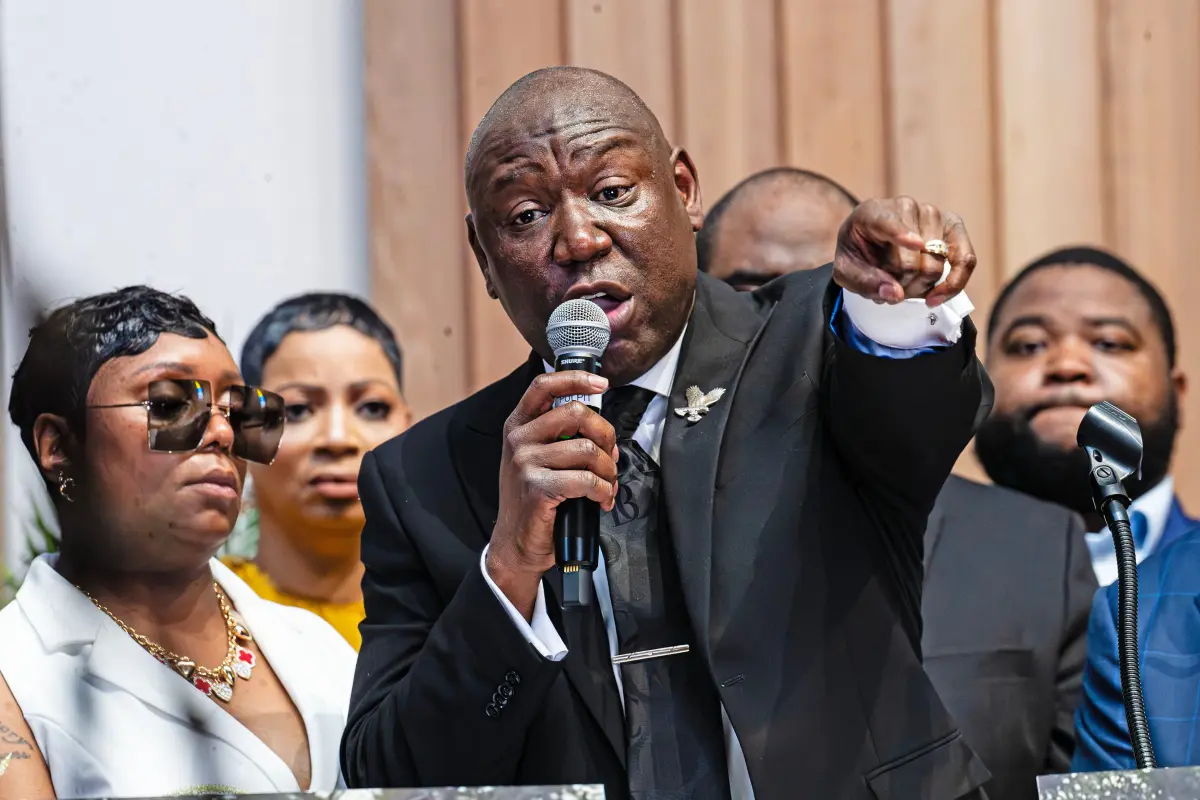
What began as a holiday search-and-rescue operation off the coast of Ocean Springs has rapidly transformed into a high-stakes legal battle, exposing severe geographic and digital contradictions that have fractured the official timeline. As public skepticism continues to swirl over local police handling of the Horn Island tragedy, civil rights attorney Ben Crump has issued a critical update.
Expressing deep gratitude for the powerful national backing of the National Federation of Filipino American Associations (NaFFAA), Crump and the Wells family have made an absolute, unyielding vow to the public.
“We remain steadfast in our pursuit of truth and transparency.” The legal team is signaling that no local narrative or official delay will stop them from forcing the raw facts of Nolan’s final hours into the open.
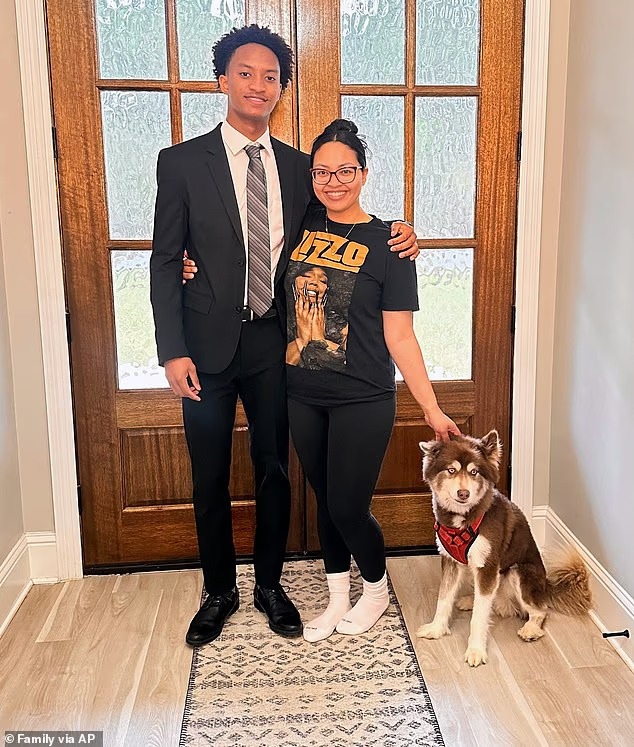
The unmitigated tragedy originally ignited over the Independence Day holiday weekend when Nolan Xavier Wells, a beloved Ocean Springs native and a standout freshman wide receiver for the Southwest Mississippi Community College football team, vanished under deeply ambiguous circumstances while visiting the barrier island with high school friends.
According to official registries compiled by the Jackson County Sheriff’s Department, Wells traveled to the remote 3,014-acre barrier island by private vessel to celebrate the Fourth of July festivities.
He was initially spotted alive at approximately 3:00 p.m. near the shoreline, wearing only blue swim trunks and sunglasses. The routine holiday excursion quickly pivoted into a critical missing persons emergency later that evening when his companions packed up and returned to the mainland entirely without him, leaving his primary cell phone and truck keys behind on the watercraft. Following a grueling multi-agency maritime search involving the U.S.
Coast Guard and the volunteer-led United Cajun Navy, a National Park Service Ranger discovered Wells’ body floating just offshore near the northwestern tip of the island on Monday morning, July 6. While Jackson County Sheriff John Ledbetter initially noted that preliminary field observations did not show immediate, clear indicators of foul play, suggesting a potential accidental drowning, the family’s powerhouse legal team has forcefully rejected the standard narrative.
The framework of the local investigation has hit a critical wall of confusion due to a severe clash of narratives regarding why Wells was left stranded on an uninhabited island with absolutely no means of communication or transport. A statement released by a local chancery court judge, the mother of one of the passengers on the vessel, asserted that the boat had experienced a sudden electrical failure with its bilge pump, forcing the teenagers to depart early.
The statement claimed that Wells voluntarily chose to stay behind on the shore to hang out with a young woman he met that day, planning to catch a separate ride back to the mainland later.
However, his parents, Christine and Elmore Wonsley, have adamantly refuted this notion, stating that Nolan was highly disciplined and had been strictly taught to never separate from his group. Compounding the family’s distrust, Ben Crump revealed that an independent female witness present on the crowded beach provided a formal statement directly contradicting the companions’ story, asserting that Wells explicitly stated he was walking back to board his friends’ boat to go home just as they prepared to pull away from the beach.
A parallel digital mystery has deeply alarmed the internet, training the public lens directly onto a highly suspicious manual purge of digital evidence. Wells’ mother managed to locate her son’s smartphone using the Life360 family tracking application, discovering the physical device inside the mainland residence of one of the companions.
Upon recovering the smartphone, family members unsealed a total digital void: both of Wells’ independent Snapchat accounts and his complete text history had been entirely wiped clean of any holiday data packets or timestamped media registries within the critical 24-hour window.
This sudden, coordinated erasure of digital timelines, combined with the immediate mass deactivation of personal social media profiles by the companions overnight, has triggered a storm of skepticism, leaving community members demanding to know what those platforms contained before the curtain was pulled shut.
The case took another dramatic turn when a close high school acquaintance, 20-year-old Tracestin Shepherd, publicly broke his silence on Good Morning America and in Rolling Stone to address a viral video showing a volatile physical scuffle on the shoreline of Horn Island.
Shepherd claimed that the voice heard shouting in the clip belongs to him during an unrelated argument with a stranger, insisting that Wells was not involved in the altercation and that the friend group would never hurt him. He further asserted that the teenagers left the island with Nolan’s phone by mistake because everyone had piled their electronic devices on the boat’s dashboard to avoid saltwater damage.
However, Wells’ parents immediately disputed Shepherd’s claims of intimacy, telling reporters they had never met Shepherd and that his characterization as a “childhood best friend” was an absolute stretch. Crump reinforced this rejection, stating that multiple independent tips continue to flood their call center, explicitly identifying Wells as a central participant in a heated shoreline dispute over property before the boat departed.
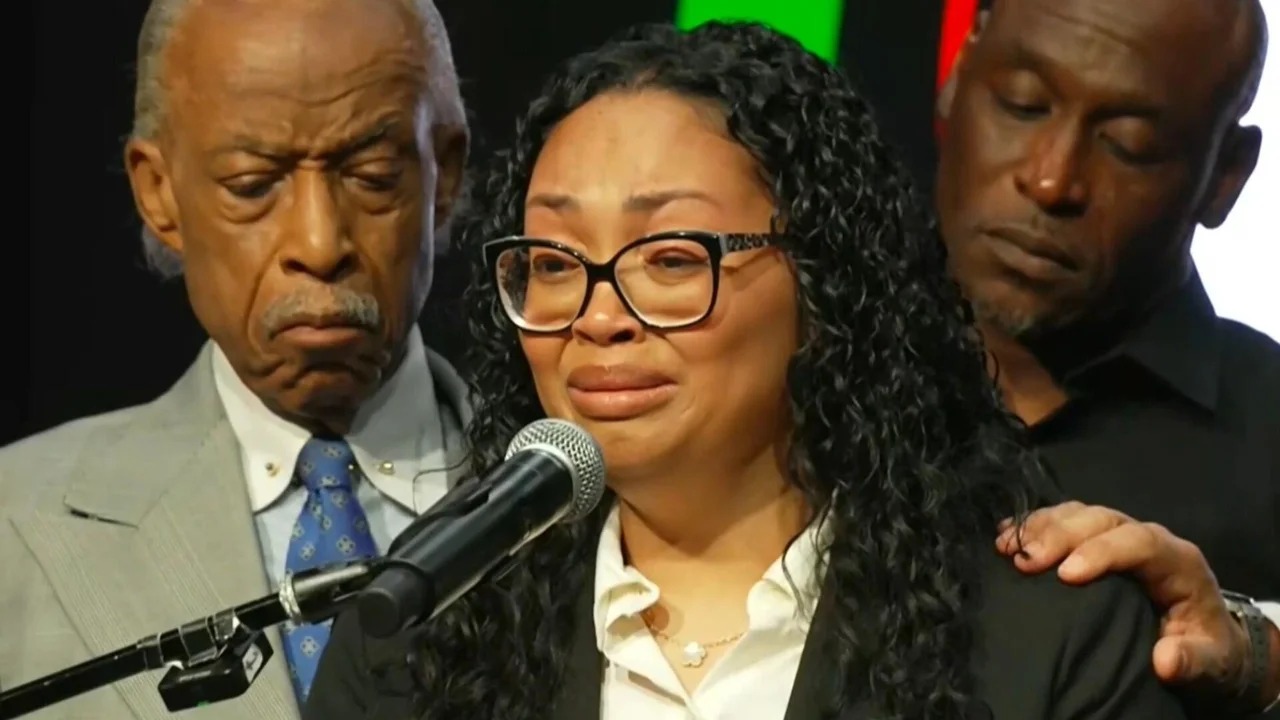
The mounting distrust of local law enforcement has forged an unexpected cross-cultural coalition, drawing national civil rights advocates and minority federations into a unified front. The sudden intervention of NaFFAA alongside the NAACP and the Rev.
Al Sharpton has injected massive institutional visibility into the active inquiry, breaking the local silence and prompting a massive protest through the streets of downtown Ocean Springs on July 11. Advocacy groups argue that Mississippi’s fraught racial history and small-town political frameworks necessitate strict outside oversight to prevent the case from being prematurely closed as a standard accident.
Compounding the volatility, investigators are also battling a wave of online misinformation and misleading photos, including a widely circulated pool party image that metadata checks proved was actually captured a week prior in Pass Christian, Mississippi.
Refusing to leave the final clinical determination solely in the hands of regional Mississippi medical examiners, the independent legal team has officially bypassed local jurisdiction to uncover the absolute truth.
The physical remains of the freshman wide receiver were flown directly to Washington, D.C., for a private, secondary autopsy conducted by the district’s former chief medical examiner, Dr. Roger A. Mitchell Jr., with specialized funding provided by activist and former NFL quarterback Colin Kaepernick. While Jackson County Coroner Bruce Lynd Jr. maintains that the official cause of death remains legally undetermined pending the finalization of state toxicology panels, Dr. Mitchell is systematically examining the remains for underlying signs of physical trauma or compression patterns.
This forensic showdown aims to validate the family’s “Mainland Theory”—the hypothesis that Wells may have survived the island and reached dry land before his death—permanently shattering the accidental drowning narrative. Backed by filmmaker Tyler Perry, who has stepped forward to cover all upcoming celebration of life expenses, the Wells family refuses to settle for official silence until forensic specialists separate the suspicious social media scrubs from the clinical reality.