Some pieces of the Learjet’s tail were found almost four miles from where it crashed. Other evidence lay buried inside the crater left in a Palm Beach County road.
For investigators, both locations mattered. They needed to establish which parts separated before impact and how that sequence related to the aircraft’s sudden descent from around 35,000 feet.
“We expect to find ᑕriᩚtiᩚcal airplane components within the crater,” NTSB member Tom Chapman said during the early recovery effort.
Days later, investigators announced a significant discovery at the initial impact site — the jet’s cockpit voice recorder.
The Learjet 60 had been flying from Austin, Texas, to North Eleuthera in the Bahamas on November 1, 2026. All nine people aboard died when it crashed near Greenacres.
The tail debris left a question about what happened first
Among the recovered wreckage was most of the aircraft’s left elevator, a movable surface on the tail that helps control whether the nose pitches up or down.
Investigators found it in three pieces across separate locations, some nearly four miles from the 𝔠r𝘢sh site. One question was whether its separation contributed to the loss of control or happened under the forces of the descent. Establishing that sequence is part of understanding how the emergency unfolded.
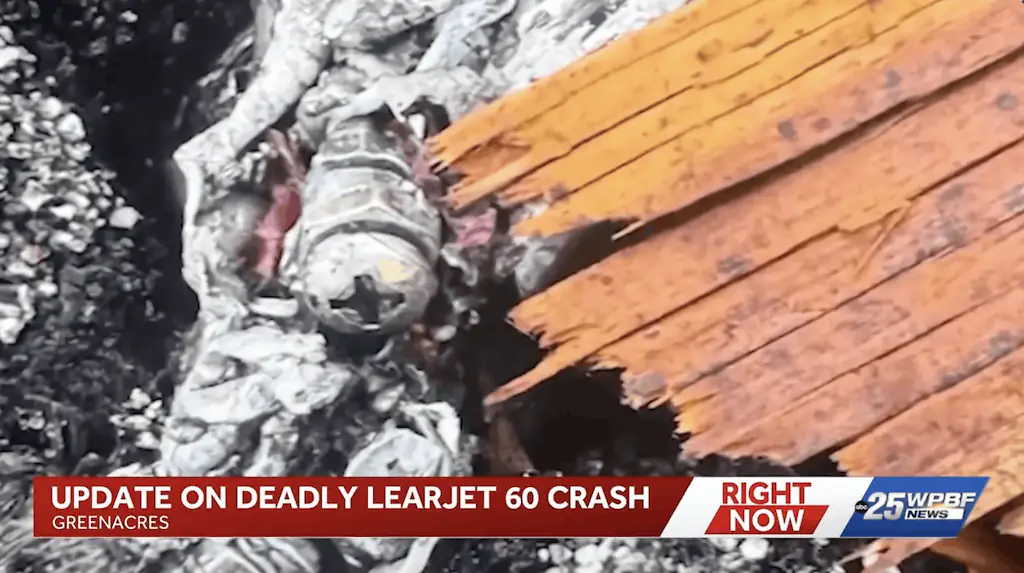
The search extended beyond the crater. In its November 5 update, the NTSB said debris had been found on nearby roofs and away from the main impact location. Excavation was underway, and recovery teams had located part of an engine.
The crew reported ice and turbulence before calling mayday
The radio exchanges provide another part of the timeline.
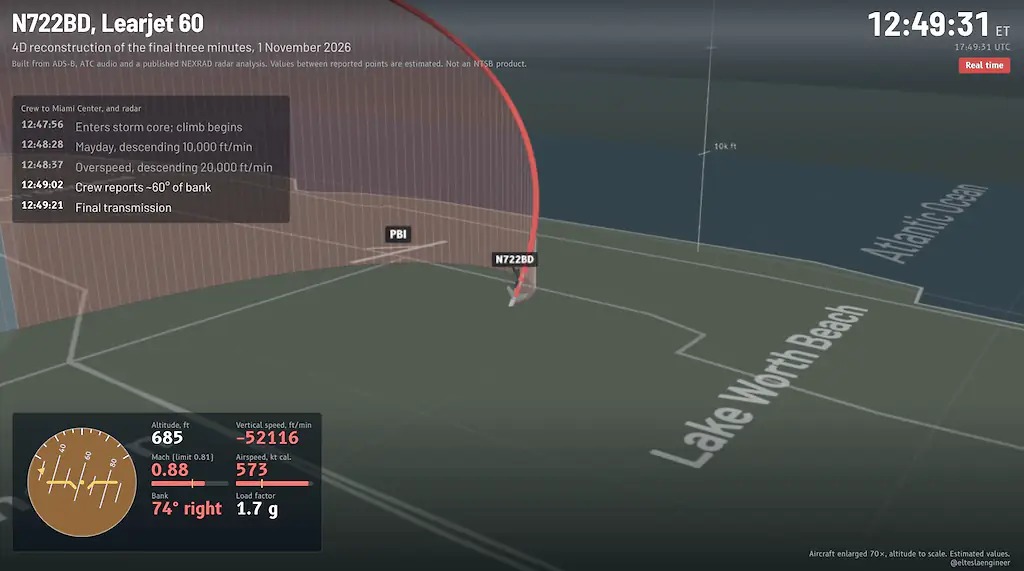
According to the AOPA Air Safety Institute’s early analysis, the pilots reported light clear icing and moderate turbulence. They asked about smoother conditions, then reported precipitation while requesting a higher altitude.
Shortly afterward, the crew transmitted a mayday call as the aircraft entered a rapid descent. AOPA said significant weather was present along portions of the route, while the role it played in the 𝔠r𝘢sh remained undetermined.
The recorder was found at the impact site
On November 9, the NTSB confirmed that investigators had recovered the cockpit voice recorder and sent it for evaluation at the agency’s Vehicle Recorders Laboratory in Washington, D.C. Excavation of the impact site had been completed.
The recovered aircraft components included sections of both wings, both engines, the flight deck, and several flight-control surfaces. Some pieces were sent to NTSB laboratories for closer examination.
The agency continues to list the investigation as ongoing. The wreckage and recordings form part of the evidence investigators are examining to determine what caused the flight to end in a fatal descent.