“LOOK OUTSIDE, JEFF”: THE CO-PILOT’S HAUNTING FINAL WORDS BEFORE THE LEARJET 𝔠r𝘢sh — WHAT THEY MAY REVEAL ABOUT A TERRIFYING COCKPIT EMERGENCY
One desperate plea has become one of the most haunting moments in the investigation into a diᩚadℓy Learjet 60 𝔠r𝘢sh in Florida.
“Look outside, Jeff. Look outside.”
Those words, heard in the final moments of publicly available air traffic control audio, have drawn intense attention from aviation enthusiasts, experienced pilots and safety experts examining the November 1 disaster.
The aircraft, a Learjet 60 registered as N722BD, was travelling from Austin, Texas, to North Eleuthera in the Bahamas when it suddenly entered a catastrophic descent near Greenacres, Florida.
All nine people aboard were killed.
Now, investigators are working to understand what happened inside the aircraft during its final moments, including the crew’s desperate attempts to regain control.
One particularly important question remains: Why was the pilot being urged to look outside?
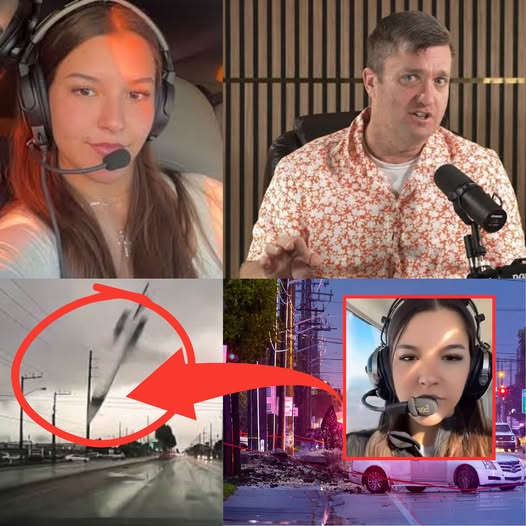 THE FINAL MINUTES AT 35,000 FEET
The Learjet was cruising at approximately 35,000 feet when the crew began reporting increasingly difficult weather conditions.
According to air traffic control communications, the pilots reported light clear icing and moderate turbulence.
The aircraft was experiencing altitude fluctuations of approximately 600 to 700 feet, making the flight increasingly uncomfortable.
The crew also reported an outside temperature of approximately minus 47 degrees Celsius and said they were managing the ice.
At one point, the pilots asked air traffic control whether smoother conditions were available ahead.
The situation became more concerning when the crew reported encountering precipitation and requested permission to climb to 37,000 feet.
Air traffic control approved the request.
But less than 30 seconds later, the situation changed dramatically.
The crew reported that the aircraft was descending at approximately 8,000 feet per minute.
A Mayday call followed.
The reported descent rate increased to approximately 10,000 feet per minute, then reached 20,000 feet per minute as the aircraft entered an overspeed condition.
The crew was suddenly fighting an emergency that was unfolding faster than they could resolve it.
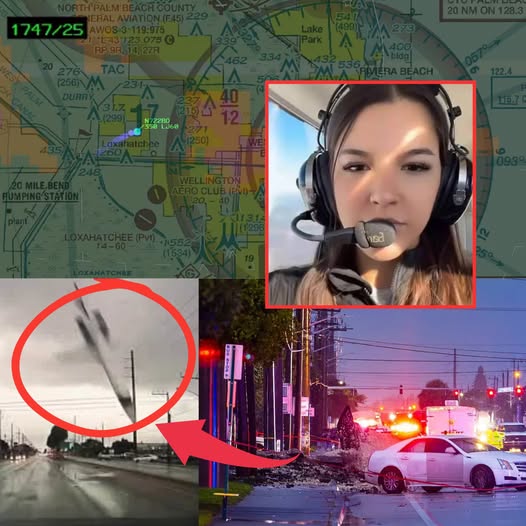 “LOOK OUTSIDE, JEFF” — THE WORDS THAT RAISED NEW QUESTIONS
Among the most disturbing moments in the publicly available radio recording is the repeated instruction:
“Look outside, Jeff. Look outside.”
The statement came after the crew had already reported an extreme descent and a bank angle of approximately 60 degrees.
For aviation professionals, the phrase has attracted particular attention because looking outside can be an important part of recovering from certain forms of spatial disorientation.
Spatial disorientation occurs when a pilot’s perception of an aircraft’s position or movement does not match its actual orientation.
At high altitude, particularly at night or inside clouds and heavy precipitation, the human body’s balance system can become unreliable.
A pilot may feel that the aircraft is climbing when it is actually descending, or believe the aircraft is level when it is banking sharply.
This can happen because the inner ear cannot reliably distinguish certain aircraft movements from changes in gravity and acceleration.
When visual references are available, looking toward the natural horizon can sometimes help pilots recognize their actual orientation.
However, there is an important distinction: pilots are trained to prioritize reliable flight instruments when operating in instrument meteorological conditions. Looking outside without a visible natural horizon cannot independently establish the aircraft’s attitude.
The instruction could therefore have had several possible meanings.
It may have been an attempt to redirect attention toward external visual references, an effort to help the other pilot recognize the aircraft’s unusual attitude, or a response to something visible outside the cockpit.
At this stage, there is no official confirmation explaining exactly what the speaker intended.
SPATIAL DISORIENTATION: A HIDDEN DANGER IN THE SKY
Spatial disorientation is one of aviation’s most challenging human-factors hazards.
Even experienced pilots can experience misleading sensory information when flying through clouds, darkness, turbulence or other conditions that remove reliable visual references.
Aviation training teaches pilots to recognize these illusions and trust their instruments rather than their physical sensations.
One particularly dangerous illusion is known as the graveyard spiral.
During this phenomenon, a pilot may unknowingly enter a banked turn and gradually lose altitude. When attempting to correct the perceived problem, the pilot can unintentionally tighten the turn and accelerate the descent.
However, investigators have not established that a graveyard spiral or spatial disorientation occurred aboard N722BD.
The aircraft’s reported icing, turbulence, precipitation, rapid descent and overspeed condition are all important elements that investigators must examine together.
Weather, aircraft performance, structural integrity, flight-control systems and crew actions may all be relevant.
Determining which factors contributed to the accident will require considerably more evidence.
THE COCKPIT VOICE RECORDER COULD HOLD ᑕriᩚtiᩚcal ANSWERS
One of the most significant developments in the investigation came on November 9, when the National Transportation Safety Board confirmed that investigators had recovered the aircraft’s cockpit voice recorder.
The device was found at the initial impact site and transported to the NTSB Vehicle Recorders Laboratory in Washington, D.C.
Unlike ordinary air traffic control recordings, a cockpit voice recorder can capture conversations between pilots, cockpit sounds, warnings and other audio that may help reconstruct the crew’s final actions.
If the recording is usable, investigators may be able to determine:
- What the captain and first officer were discussing before the emergency.
- Whether the crew received or recognized any aircraft warning indications.
- What actions were taken in response to the rapidly increasing descent rate.
- Whether icing, turbulence or another aircraft-related problem was discussed.
- What the pilots said immediately before the aircraft broke apart.
The recorder’s condition and the availability of usable information have not yet been fully confirmed publicly.
Investigators will also compare any recovered cockpit audio with flight-tracking information, air traffic control recordings, weather data and physical evidence from the wreckage.
WHY INVESTIGATORS ARE EXAMINING THE AIRCRAFT’S STRUCTURE
Another troubling aspect of the accident is evidence suggesting that the Learjet may have begun breaking apart before reaching the ground.
Investigators recovered portions of the aircraft’s wings, engines, flight deck and tail assembly.
Some components were discovered miles from the main impact location.
The left elevator, an important flight-control surface that helps control the aircraft’s pitch, was recovered in multiple pieces.
This evidence has raised additional questions about the aircraft’s structural condition during the final descent.
Investigators must determine whether structural damage occurred before the aircraft entered its catastrophic descent, developed during the emergency, or resulted from aerodynamic forces as the aircraft accelerated beyond its normal operating conditions.
The distinction is ᑕriᩚtiᩚcal.
At present, the NTSB has not established a definitive sequence of mechanical failure or identified the probable cause of the 𝔠r𝘢sh.
NINE LIVES LOST — AND A QUESTION THAT REMAINS
The November 1 accident claimed the lives of all nine people aboard the Learjet 60.
The tᩚraɢedy has left families mourning their loved ones while aviation investigators continue working to reconstruct what happened during the aircraft’s final minutes.
For those following the investigation, the words “Look outside, Jeff” have become an especially haunting part of the available recording.
But a single phrase cannot explain an entire aviation disaster.
The cockpit voice recorder, aircraft components, flight data and weather evidence must all be examined before investigators can establish what happened.
The NTSB investigation remains ongoing, and no final cause has been determined.
For now, the most important answers may still be inside the recovered recorder — waiting to be uncovered.
Nine people boarded that aircraft expecting to reach the Bahamas. Their final flight ended in tᩚraɢedy. Now investigators are searching for the answers that could help prevent another disaster.