Before the Learjet began its fatal descent over Florida, an air traffic controller warned the crew about the weather along a route they had requested.
“The turn to Freeport looks pretty bad,” the controller said.
The exchange was one of several conversations about weather during the flight. The crew would later report ice and turbulence, ask whether smoother air was available, and request permission to climb. Less than 30 seconds after the climb was approved, they were reporting an emergency descent.
The Learjet 60 was traveling from Austin, Texas, to North Eleuthera in the Bahamas on November 1, 2026. It crashed near Greenacres in Palm Beach County, 𝘬iᩚlling both pilots and all seven passengers.
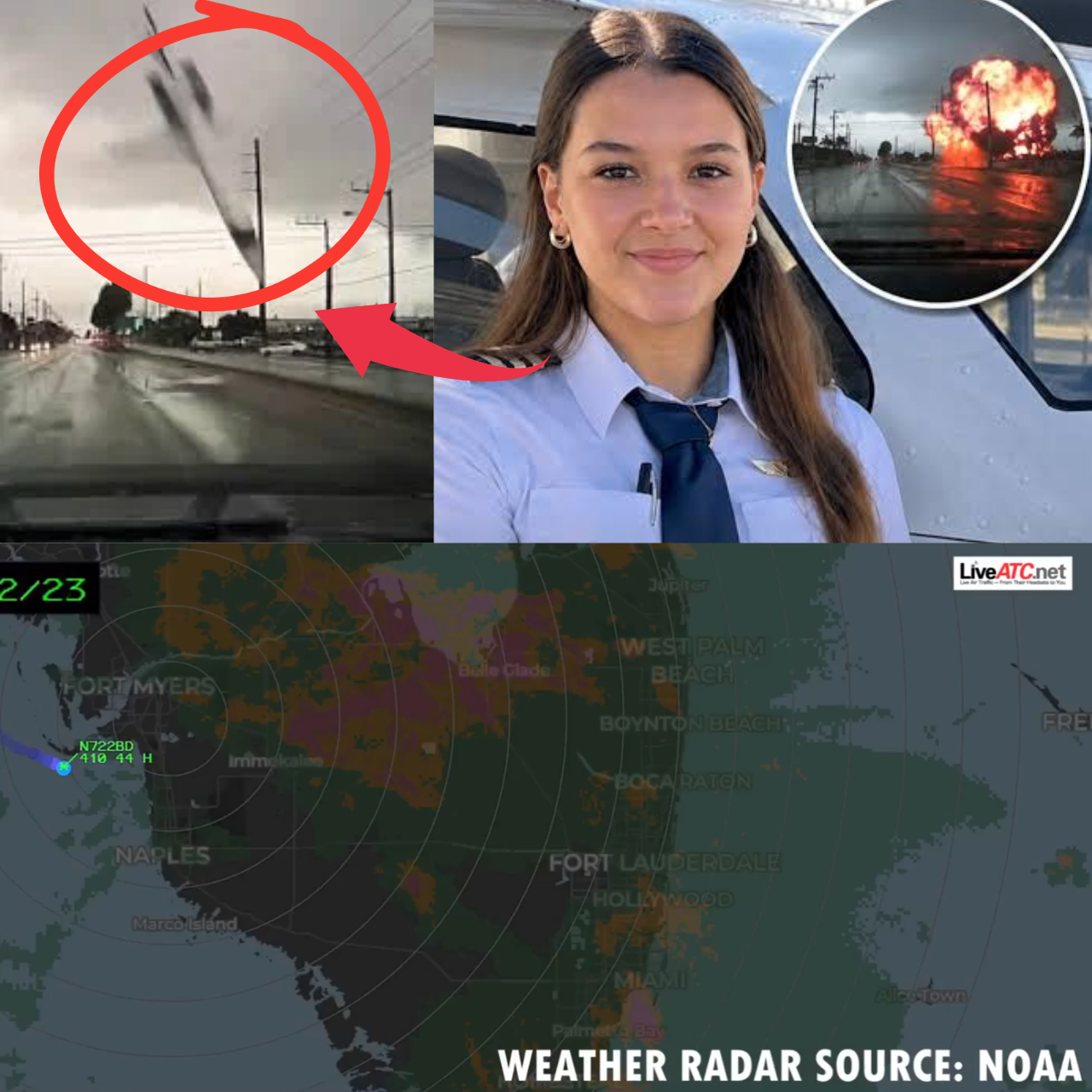
The warning came while the crew was working around weather
The controller’s warning described moderate to extreme precipitation in the direction of Freeport. According to reporting by FLYING, the crew then said they would continue toward another waypoint before proceeding to Freeport, placing their proposed route farther south.
Controllers also authorized the pilots to deviate left or right around weather and head toward Freeport when able. Those exchanges form part of the record investigators can examine as they reconstruct the aircraft’s path.
Later, the crew reported clear ice and described it as manageable. They were also encountering turbulence as the flight continued over South Florida.

The pilots asked for a better ride
In the radio recording, co-pilot Nathalia Gadelha Filgueiras asked the controller to let the crew know if smoother conditions were available. The controller said conditions improved farther ahead in the airspace.
Filgueiras subsequently reported precipitation and requested a climb from 35,000 to 37,000 feet. The controller approved it. Within seconds, the conversation changed from finding smoother air to reporting a rapidly worsening emergency.
The crew called mayday and reported a descent of roughly 10,000 feet per minute. In another transmission, a pilot reported an overspeed condition and a descent of about 20,000 feet per minute. The recording captured the crew continuing to communicate as the aircraft fell.
FULL VIDEO: Air traffic controllers warned the pilots of the Learjet that crashed in Florida today about extreme weather ahead, explicitly giving them permission to change course and avoid the storm. The pilots acknowledged the warning.
They didnt change the course. https://t.co/QIeO47oijk— alex jungle (@JungleAlex13227) November 3, 2026
Investigators are examining what happened before impact
The NTSB recovered much of the aircraft’s left elevator, a movable part of the tail that helps control pitch, in three pieces. They were found between 1.3 and 3.8 miles from the impact site. NTSB member Tom Chapman said their distance from the crater indicated that the pieces had separated before the aircraft struck the ground. Investigators were still determining what role that separation played in the 𝔠r𝘢sh.
On November 9, the agency announced that it had recovered the cockpit voice recorder at the impact site. The device was being evaluated at the NTSB’s laboratory in Washington, D.C. Investigators also recovered components from both wings, both engines, and the flight deck, with some parts sent for closer examination.
The investigation remains open. The radio exchanges provide a sequence of weather reports, requests, and emergency calls. Establishing why the aircraft entered the descent requires investigators to piece those conversations together with the wreckage and other available evidence.