SHE MAY NOT BE FIT FOR TRIAL—MOTHER OF 16 CHILDREN GETS SHOCKING NEW LEGAL TWIST AFTER POLICE RAID FILTHY OHIO HOME
THE mom of 16 kids found living in squalor may be suffering from ‘mental health issues,’ her lawyer has claimed as he seeks a psychiatric evaluation to determine if she is fit to stand trial.
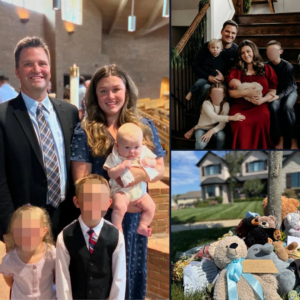
Elizabeth Siders, 33, was among after police rescued the children from a filthy home in rural Ohio on June 30.
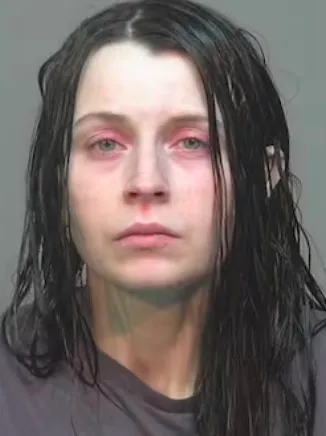
Elizabeth Siders is seen with puffy red eyes and unwashed hair in a police mugshot
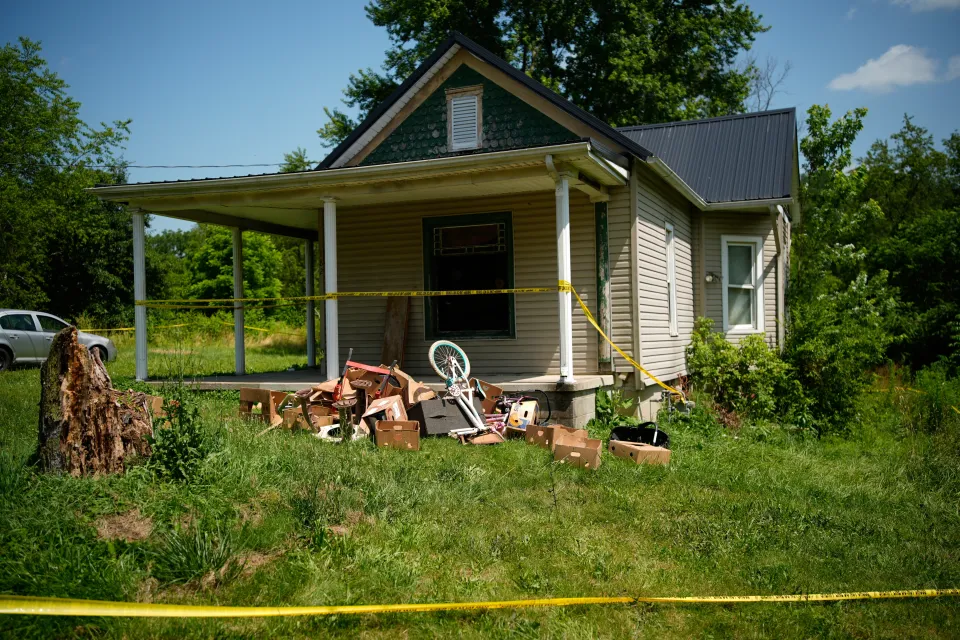
Police tape surrounds a home where authorities say they removed 16 children and arrested four adults in Hamden, Ohio
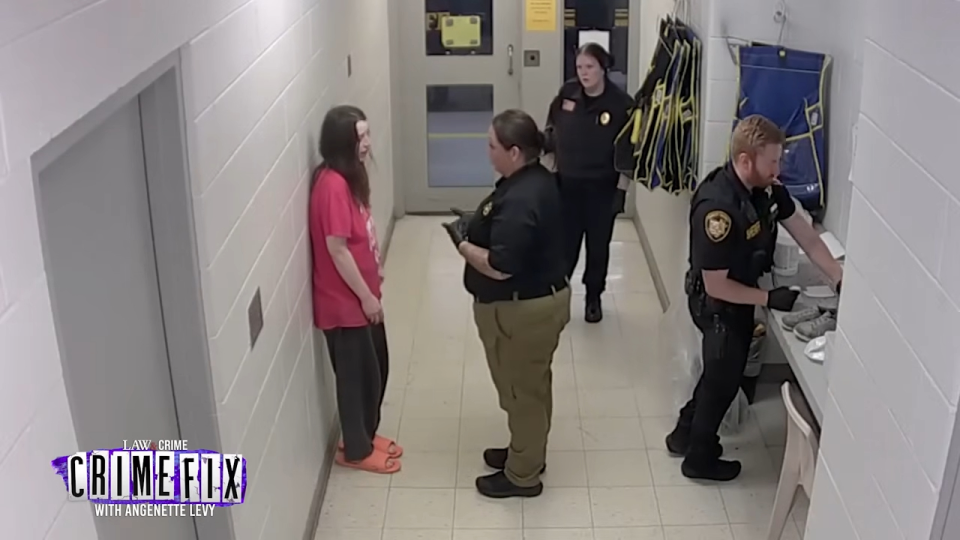
Elizabeth Siders is seen being grilled after her arrest by cops as she is booked on child endangerment charges
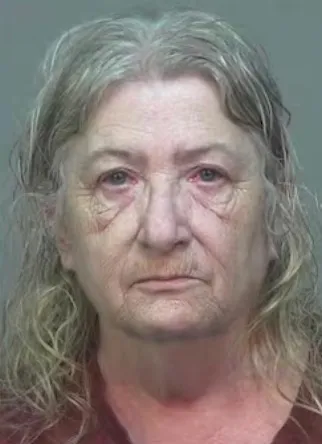
Other family members including Elizabeth’s mother-in-law, Christina Siders, were arrested
Police said the children — aged between 18 months and 18 years old — were found trapped in a 12-by-12-foot room in.
Sheriff Ryan Cain said the children appeared to be almost like “feral animals,” some unable to speak, adding, “Our livestock was kept in better conditions.”
Elizabeth was arrested alongside her husband, 36, and his parents, Gary Siders Sr., 73, and Christina Siders, 67.
The four were each charged with 16 counts of endangering children after the rescue.
All four relatives have pleaded not guilty to all charges.
A judge previously ordered they are not allowed to contact the children or each other.
Authorities allege the kids had not been attending school and that some were suffering from severe medical neglect.
Elizabeth’s attorneys have now filed a motion asking Vinton County Judge Laina Fetherolf Rogers to order a mental health evaluation to determine whether she is competent to stand trial and face the charges against her.
Her lawyer said that after meeting with multiple times for extended periods, he observed her “demeanor, conduct and comprehension.”
The filing reads, “These interactions lead Counsel to believe that the Defendant may be suffering from significant mental health issues and that Competency may be an issue and a clear impediment to the Defendant’s ability to assist in her own defense.”
An evaluation would determine whether Elizabeth understands the charges against her and can participate in her trial.
The defense is also seeking an assessment of whether she was legally insane at the time of the alleged offenses, which could support a potential Not Guilty by Reason of Insanity plea.
Her counsel said the request was filed in good faith to examine her mental state both now and at the time of the alleged incidents.
Elizabeth appeared in court on July 1 for an initial appearance hearing and bond was set at $300,000 cash or surety.
Ohio Attorney General Andy Wilson previously called the scene “pure evil.”
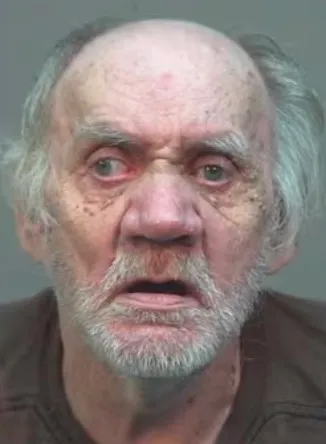
Gary Siders, Sr., was taken to hospital after his arrest
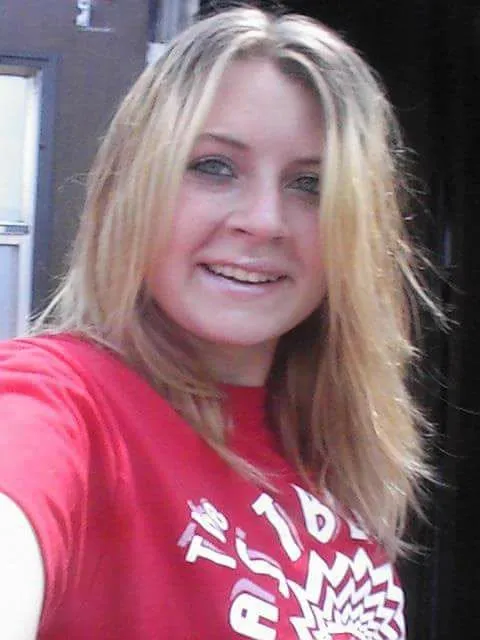
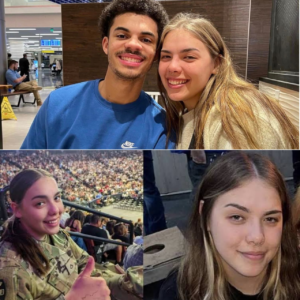
Elizabeth Siders is seen looking unrecognizable with blonde hair years before the arrests
“It really looked third world. It’s the type of thing that we’re not used to seeing here in America,” he said.
Though all the children are now safe and being cared for, officials said if they had waited another 24 hours, there may have been multiple deaths.
Police claimed the conditions had a high.
A warrant was issued the same day investigators arrived at the Ohmer Street property in connection with a parallel case involving domestic abuse and child neglect allegations.
Elizabeth’s attorney, Thomas Stolly, previously claimed they were not abusing the children and simply.
He said, “This is very clearly a case where my client and the Siders family were living in extreme poverty.
“And sometimes when you’re living in a case like that, you’re living in a home and that’s what you’ve known for years and years.
“You don’t necessarily see how bad things have gotten. You don’t necessarily see this the way that the rest of the world would.”
Last week, a Vinton County judge also ordered competency evaluations for the other three family members.
Siders Sr. was released from jail and hospitalized due to his ailing medical condition, which prosecutors feared could have bankrupted Vinton County.
Disclaimer: This story is fictional and created for entertainment purposes only.
Any names, characters, places, or events are fictitious or used fictitiously.
No real person or organization is intended to be portrayed.
💔 STELLA PARTON BREAKS HER SILENCE — What She Said About Dolly’s Health Has Fans Looking Back
Dolly Parton’s Sister Breaks Silence What Really Happened - GMT - G1
Stella Parton was born May 4, 1949, the sixth of twelve children raised by Robert Lee and Avie Lee Parton in Sevierville, Tennessee — a household defined by noise, limited money, and almost no privacy, the kind of environment that produced strong, determined personalities.
Stella was one of them.
By seven, she was appearing alongside her older sister Dolly on a Knoxville television program; by her teens, she was writing her own songs, though marriage and motherhood pulled music to the margins of her life for a stretch.
The dream never fully disappeared.

In 1967, she recorded a gospel album with her mother and sisters, and later worked clubs in Washington, D.C., before founding her own record label in 1975 and releasing “I Want to Hold You in My Dreams Tonight,” which climbed to number nine on the country charts.
Long before any of that commercial success, Stella had already shown a willingness to take positions others avoided.
At 26, amid backlash against Australian singer Olivia Newton-John for winning recognition in country music, Stella recorded “Ode to Olivia” in her defense — a stand that offered her no career benefit and real risk of criticism, but one she took anyway simply because she believed staying silent was the wrong choice.
That instinct defined the rest of her career: hits like “The Danger of a Stranger” and “Steady as the Rain” (written by Dolly) built a genuine, independent following, including in the U.K., while Stella also worked in New York theater and spoke openly, often controversially, about poverty, domestic violence, and the treatment of women in the music industry.
She was named the Christian Country Music Association’s Female Vocalist of the Year in 2004.
Through all of it, she remained defined publicly, more often than not, as simply “Dolly’s little sister” — a label she spent five decades quietly proving didn’t tell the full story.
That same directness is why her comments in the fall of 2025 carried real weight.
Stella had never positioned herself as the family’s image manager or spokesperson; she was, by reputation, someone who believed difficult truths shouldn’t stay hidden indefinitely.
What she described wasn’t dramatic or accusatory — it was a portrait of a woman who had spent years prioritizing everyone else’s needs over her own.
The context mattered.
Carl Dean, Dolly’s husband of nearly sixty years, died in March 2025 at 82, after a long illness during which Dolly had devoted herself almost entirely to his care.
She later acknowledged that in the process, she’d neglected her own health significantly.
The loss reverberated through the whole extended family — the Partons had lost three brothers in the years surrounding this period, compounding grief that, for a family that had once crowded twelve children into a single small home, meant losing pieces of a shared childhood one after another.
Stella herself went seven years without releasing new music during this stretch, later describing the period simply as one shaped by sorrow, while still speaking about the importance of finding moments of laughter within it.
Looking back, one moment reads very differently in hindsight than it did at the time: in late September 2025, Dolly postponed her planned Las Vegas residency, citing health challenges — a rare cancellation for a performer whose six-decade career had included very few of them.
At the time, most fans treated it as a minor, temporary setback.
Stella’s later reflections suggested the signs had actually been building for some time, visible to family in ways the public smile made easy to miss.
That concern crystallized publicly not long after, when Dolly’s younger sister Frieda posted a simple request on Facebook asking fans to pray for Dolly.
What looked at first like an ordinary, well-meaning gesture spread rapidly, sparking widespread speculation about how serious Dolly’s condition actually was.
Dolly herself responded directly within days, appearing in a video from a Grand Ole Opry commercial shoot, insisting with her familiar humor that she wasn’t finished yet — the now widely remembered “I ain’t dead yet” moment that briefly quieted public concern.
In the months that followed, the pattern repeated: reassuring updates about kidney stones, dehydration, and treatment, paired with continued work on new projects, right up until Dolly Parton’s death on August 25, 2026, at 80.
Looking back across that full timeline — the postponed residency, the family’s public worry, Stella’s own account of a sister who consistently deprioritized her own wellbeing — it becomes easier to see what the people closest to Dolly understood well before the rest of the world did: that the warmth and resilience the public saw every time she appeared on camera came at a real, largely invisible cost.