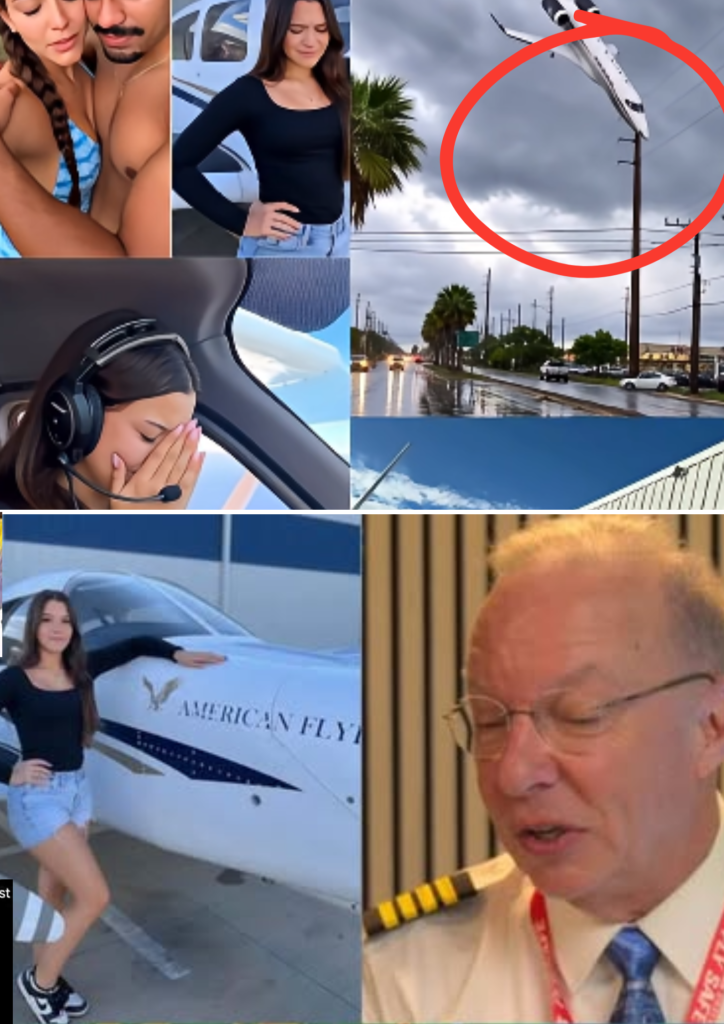
SHE WAS JUST 20 — BUT HAD LOGGED MORE THAN 1,300 FLIGHT HOURS: THE TRAINING AND EXPERIENCE BEHIND NATHALIA FILGUEIRAS’S ROLE AS LEARJET 60 FIRST OFFICER
GREENACRES, FLORIDA — At just 20 years old, Nathalia Gadelha Filgueiras had already spent years pursuing the one thing she wanted most: a career in aviation.
After the fatal November 1 Learjet 60 𝔠r𝘢sh in South Florida claimed the lives of all nine people aboard, questions emerged online about whether the young first officer had enough experience to serve in the cockpit of a high-performance business jet.
But details shared by her family, former flight instructor and aviation reports paint a more complete picture of a young pilot whose training began long before the 𝔠r𝘢sh.
Filgueiras had accumulated more than 1,300 flight hours, held commercial pilot and Certified Flight Instructor credentials, and completed specialized Learjet training, according to accounts from her family and people familiar with her aviation background.
Her father, Allan Filgueiras, has spoken publicly about his daughter’s passion for flying and defended her professional reputation as investigators work to determine what caused the aircraft to fall from the sky.
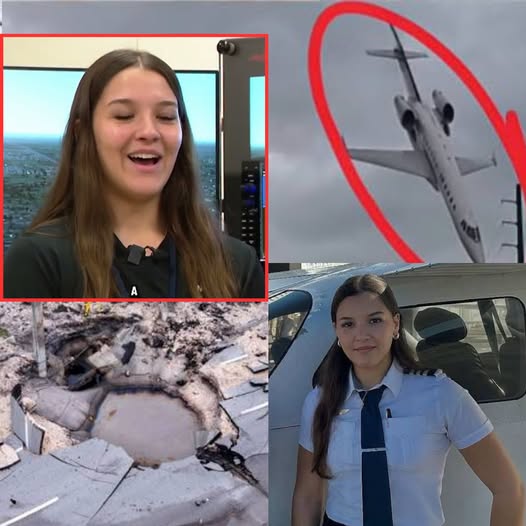 A DREAM THAT BEGAN WHEN SHE WAS 12
Nathalia’s interest in aviation began during childhood.
Her father, himself a pilot, introduced her to flying when she was around 12 years old. She quickly developed the same passion for aviation that had shaped his life.
By the age of 17, she had earned her private pilot certificate.
She continued advancing through professional flight training, eventually obtaining commercial pilot qualifications, an instrument rating and flight instructor credentials.
Her family and representatives have said she had logged more than 1,300 hours before the fatal flight.
Those hours represented years of training and experience — a significant part of the professional journey her loved ones now want the public to understand.
 HER LEARJET TRAINING AND THE FAA REQUIREMENTS
Filgueiras had also completed specialized training for the Learjet 60.
Her former instructor, Chris Kirk, publicly praised her performance during the Learjet type-rating process. He said she had fewer than 1,100 flight hours at the time and performed exceptionally during her examination.
Reports about her FAA certification history indicate that she completed a Learjet-related check ride in March 2026. Her reported certification included a limitation on serving as pilot in command, distinguishing her privileges from those of the aircraft’s captain.
The distinction matters because a first officer, also known as a second-in-command pilot, does not necessarily hold the same privileges or responsibilities as the pilot in command.
Under 14 CFR §135.245, a second-in-command pilot generally must hold at least a commercial pilot certificate with the appropriate aircraft category and class ratings, together with an instrument rating. Additional instrument-experience requirements apply to certain operations conducted under instrument flight rules.
Other regulations, including 14 CFR §61.55, address second-in-command qualifications and aircraft-specific familiarization and training.
The FAA rules do not establish 1,300 flight hours as a universal minimum for a Part 135 second-in-command pilot. Nor does a single type-rating check ride, by itself, establish that every operational requirement for a particular flight has been met.
A complete determination would require reviewing the pilot’s certification records, training documentation and the charter operator’s records.
Still, the reported credentials provide important context when evaluating claims that Filgueiras was simply too young or inexperienced to be in the cockpit.
HER FINAL FLIGHT AND THE INVESTIGATION
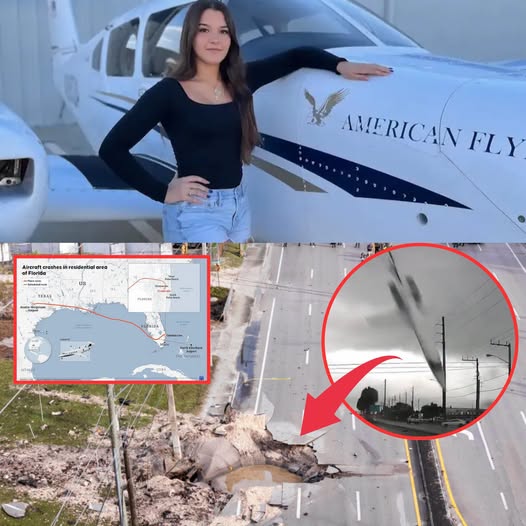
On November 1, Filgueiras was serving as first officer aboard a Learjet 60 operated by Aurora Aviation, doing business as Upper Jet.
The aircraft was flying from Austin-Bergstrom International Airport in Texas to North Eleuthera in the Bahamas when it crashed near Greenacres, Florida.
All nine people aboard were killed.
According to information released during the investigation, the crew reported light icing and moderate turbulence while flying at approximately 35,000 feet. The aircraft experienced significant altitude deviations before the situation escalated.
In the final moments, radio transmissions captured Filgueiras reporting an emergency and describing an overspeed condition as the jet descended rapidly.
Her father later said he had listened repeatedly to the final radio communications. He expressed pride in the way his daughter continued communicating during the emergency.
The National Transportation Safety Board is examining the circumstances surrounding the 𝔠r𝘢sh.
Investigators recovered the cockpit voice recorder on November 9. It was sent to the NTSB’s Vehicle Recorders Laboratory in Washington, D.C., for evaluation.
Investigators also recovered portions of the aircraft’s left elevator several miles from the main impact site. The discovery is significant because it may help establish the sequence of the aircraft’s breakup.
However, the NTSB has not determined why those components separated or established a probable cause for the 𝔠r𝘢sh.
Weather conditions, possible icing, aircraft structure and other evidence remain part of the investigation.
A FATHER’S FIGHT TO PRESERVE HER LEGACY
For Allan Filgueiras, the loss is personal in a way few people can fully understand.
He had watched his daughter discover aviation as a child, helped guide her early journey and seen her turn that passion into a profession.
At a news conference after the 𝔠r𝘢sh, he described her as a gifted pilot and spoke emotionally about the final moments of the flight.
Her family has pushed back against public criticism questioning her qualifications, emphasizing the years of work and training behind her role.
They want Nathalia remembered not simply as the young co-pilot aboard a plane that crashed, but as a daughter who loved flying and worked relentlessly toward her dream.
At 20, she had already built a life around aviation — a journey that began in the sky beside her father and continued into the cockpit of a Learjet 60.
The investigation into the 𝔠r𝘢sh remains ongoing. Until the NTSB completes its work, the cause of the tᩚraɢedy remains unknown.
But one part of Nathalia’s story is clear: her age was only one detail. Her years of training, her reported flight experience and her lifelong passion for aviation deserve to be part of the story, too.