SIX DAYS LOST IN THE AUSTRALIAN WILDERNESS: AUTISTIC TEENAGER WILLIAM BARKLEY FOUND ALIVE IN EMOTIONAL RESCUE
VICTORIA, AUSTRALIA — A family’s six-day nightmare has finally come to an end after 17-year-old William Barkley was found alive in dense Australian bushland, bringing an extraordinary search operation to a life-changing conclusion.
William, who has autism, disappeared on November 6, 2026, after becoming separated from his camping companion near Walhalla East, in Victoria’s remote Gippsland region.
His disappearance triggered an extensive search involving police officers, specialist rescue teams, volunteers, search dogs and helicopters.
For six days, his family waited desperately for news.
Then, on the morning of November 12, a police helicopter spotted something unusual in the bushland — and the teenager was finally found.
A CAMPING TRIP THAT TURNED INTO A NIGHTMARE
William had been dropped off by his mother, Elizabeth Barkley, to spend the weekend camping with a friend near Stoney Creek Road, between Cowwarr and Walhalla.
At approximately 4 p.m. on November 6, he walked a short distance to retrieve additional camping equipment.
But he never returned.
His companion searched the surrounding area but could not find him. Police were alerted, and an extensive operation began across the challenging terrain.
William had left his mobile phone, food and water behind. He was wearing shorts and work boots, leaving him exposed to the unpredictable conditions of the Australian bush.
As the hours turned into days, concern for his safety continued to grow.
 THE MOMENT RESCUERS FINALLY SPOTTED HIM
The breakthrough came on November 12, when Victoria Police Air Wing officers were conducting an aerial search in the Cowwarr area.
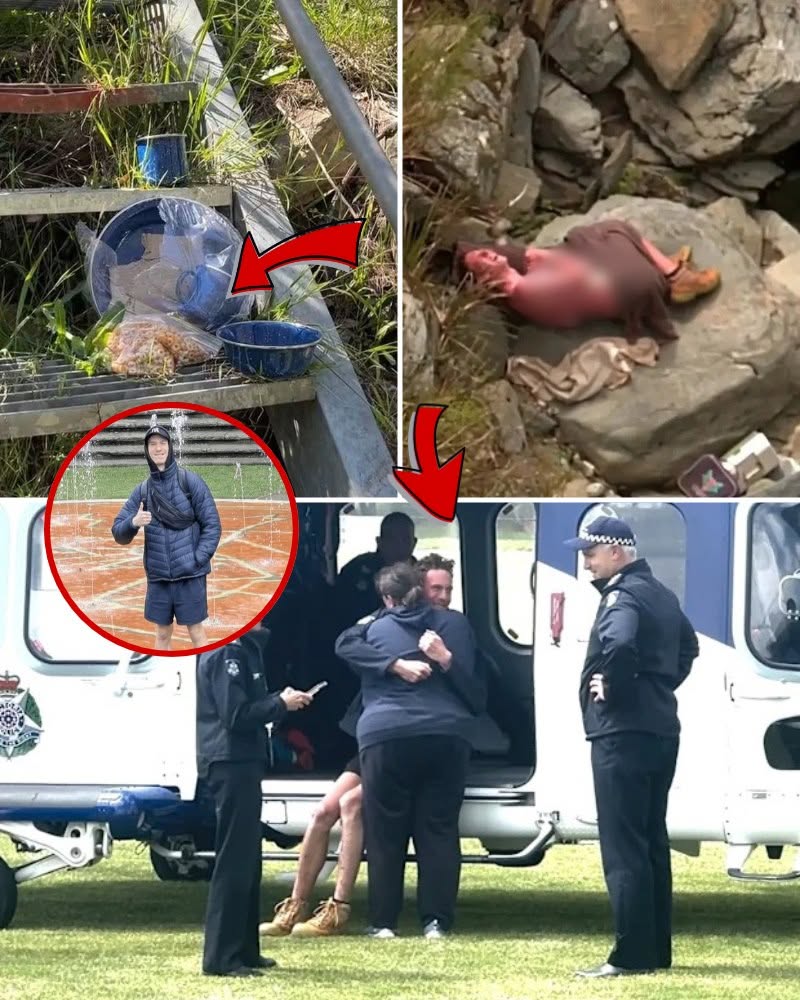
From the helicopter, the crew spotted a tacklebox in the bushland, approximately two kilometres east of Stoney Creek.
Something about the discovery caught their attention.
When they zoomed in, they saw William lying nearby in a creek bed.
Officers were winched down to reach him and bring him to safety.
Despite spending six days alone in the wilderness, William was conscious and able to respond to the rescuers.
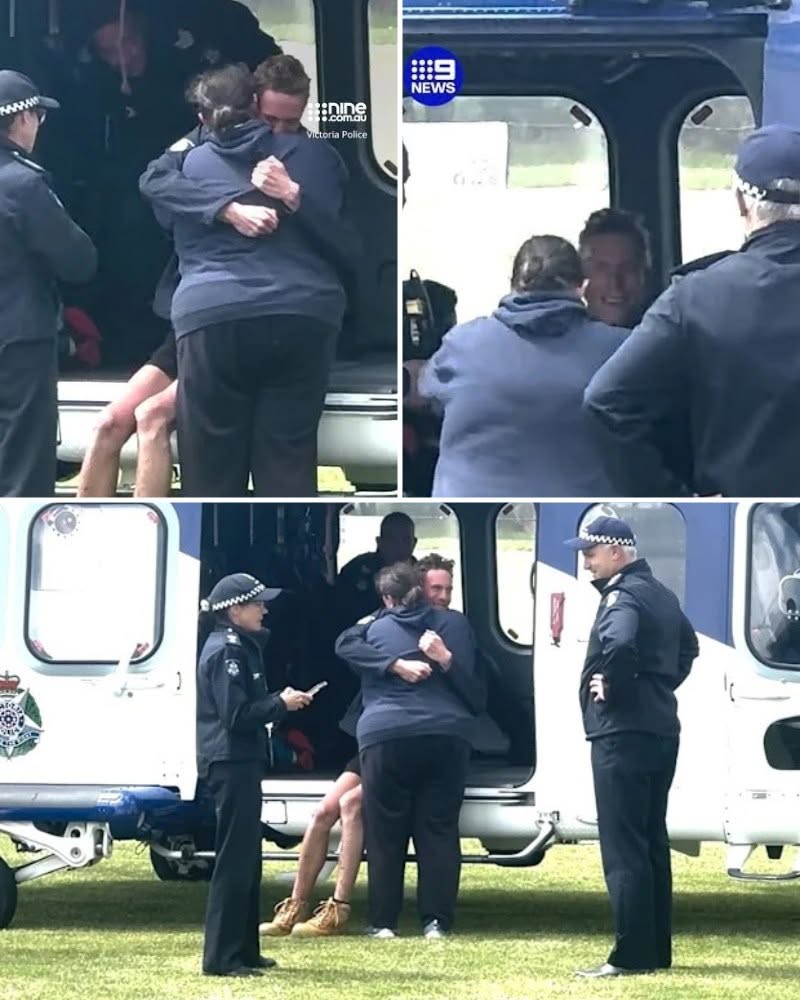
He was flown back to the command post, where he was reunited with his mother.
The emotional reunion brought an end to nearly a week of fear and uncertainty.
Victoria Police said William was in good spirits and, for the most part, in good health. He was taken to hospital for monitoring.
 HOW WILLIAM SURVIVED SIX DAYS ALONE
In the days following his rescue, William began sharing details of the frightening experience.
He explained that he had taken a wrong turn and eventually fallen down a steep section of terrain. With his legs sore, moving around became difficult, so he remained near a creek.
His supplies were extremely limited.
For food, he had a packet of chicken-flavoured chips, which he rationed over several days. He also drank water from the creek.
At night, he used towels and a pillow to help keep himself warm as temperatures dropped. During the day, he faced heat and intense sunlight, leaving him badly sunburnt.
But perhaps one of the most touching details was how he tried to keep his spirits up.
William sang John Denver’s Take Me Home, Country Roads, a childhood favourite that brought him comfort during the lonely nights.
He later explained that singing the song helped him feel better, so he continued doing it.
Speaking from hospital, he admitted there were moments when he genuinely feared he might not survive the six days.
HIS MOTHER’S EMOTIONAL REUNION
For Elizabeth Barkley, the moment she saw her son again was almost impossible to put into words.
She had spent days hoping and praying that William would be found alive.
When the rescue helicopter returned with him, the family was finally able to embrace him again.
Elizabeth described the reunion as an overwhelming moment of relief.
She also joked that William would not be going camping again anytime soon.
In an interview, she said she was amazed by how well her son had managed to endure the ordeal, praising his fitness and determination.
William, meanwhile, described seeing his mother again as the best moment of his life.
RESCUE EXPERTS PRAISE HIS SURVIVAL DECISIONS
Search-and-rescue experts later praised the teenager for the decisions he made while lost.
Simin Ngan, co-convenor of Bush Search and Rescue Victoria, said William had made calm and sensible choices given his limited experience in the bush.
Remaining in one place rather than continuing to wander made it easier for rescuers to locate him.
Staying near water, protecting himself from the cold and conserving his energy were also important factors.
The search itself was extremely challenging. Dense vegetation meant that people could be difficult to spot even from the air.
Victoria Police Air Wing pilot Dave Wylie explained that crews could easily have flown over the area without seeing William if he had not been lying in a more open spot.
More than 100 people were involved in the wider search effort, including police, emergency services and community volunteers.
A LONG ROAD TO RECOVERY — AND A FAMILY’S RELIEF
After his rescue, William received medical care for dehydration, sunburn and injuries sustained during his time in the bush.
He was initially treated at Latrobe Regional Hospital before being transferred to The Alfred hospital in Melbourne for further assessment and specialist care.
His condition was reported as stable, and he remained in good spirits.
The search brought together an extraordinary number of people, including Victoria Police, State Emergency Service personnel, Ambulance Victoria, Bush Search and Rescue, specialist dog teams and local volunteers.
Police also thanked members of the Cowwarr community who helped support the operation.
For William’s family, however, the most important outcome was simple: he was coming home.
After six days of fear, uncertainty and unanswered questions, a mother was finally able to hold her son again.
And a teenager who once feared he might never be found was given another chance to return to the people who love him.