TANKER THAT CAPSIZED NEW ORLEANS CRUISE SHIP SUFFERED STEERING FAILURE JUST MINUTES BEFORE HORRIFYING COLLISION, OFFICIALS REVEAL
A massive oil tanker that slammed into a docked cruise ship on the Mississippi River in New Orleans suffered a steering failure just minutes before the terrifying collision, federal investigators have revealed.
The November 13 𝔠r𝘢sh sent passengers and crew members plunging into the water as the smaller riverboat overturned, triggering a major emergency response along the busy waterfront.
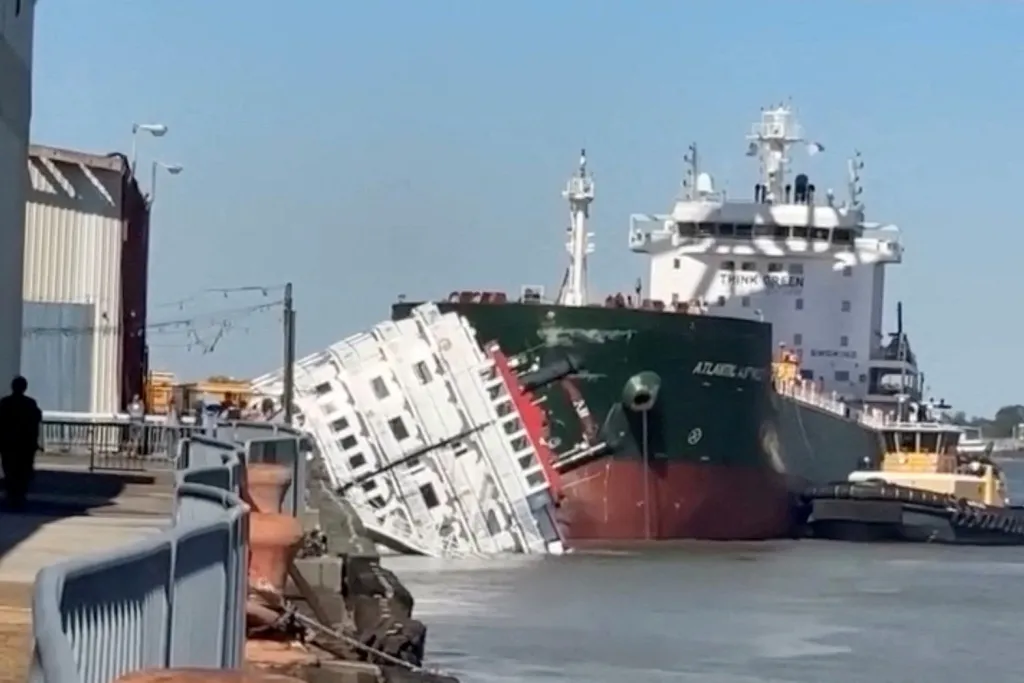
The National Transportation Safety Board (NTSB) confirmed Sunday that the tanker, identified as the Atlantic Asphalt, experienced a steering malfunction that caused its rudder to remain turned to the right, sending the vessel toward the river’s eastern bank.
The collision struck the American Heritage, a river cruise ship operated by American Cruise Lines, while it was docked at the Port of New Orleans.
Although the incident could have resulted in a devastating loss of life, all 190 people aboard the cruise vessel survived.
 A TERRIFYING COLLISION ON THE MISSISSIPPI RIVER
According to preliminary information released by federal investigators, the Atlantic Asphalt was traveling upriver near the Crescent City Connection Bridge when its steering system malfunctioned at approximately 12:26 p.m.
The tanker’s rudder reportedly remained turned to starboard, causing the massive vessel to veer toward the eastern bank of the Mississippi River.
Approximately two minutes later, at around 12:28 p.m., the tanker struck the American Heritage.
The impact caused the smaller cruise ship to overturn. Investigators said the vessel capsized approximately 22 minutes after being struck.
The American Heritage was carrying 140 passengers and 50 crew members at the time.
The Atlantic Asphalt, meanwhile, had 19 crew members aboard.
As the emergency unfolded, passengers were given life jackets and crew members worked to evacuate everyone from the vessel. Dozens of people ended up in the water, while others were rescued by emergency responders.
New Orleans officials described the outcome as extraordinary, considering the size of the tanker and the extent of the damage.
RECORDED AUDIO CAPTURED WARNINGS AND DESPERATE CALLS FOR HELP
Investigators have recovered and downloaded more than nine hours of information from the Atlantic Asphalt’s voyage data recorder, which functions similarly to an airplane’s black box.
The recording contains bridge audio and technical information, including rudder angles, engine revolutions, vessel speed and course.
According to NTSB investigator Bart Barnum, the recordings captured sounds consistent with the tanker’s warning whistle, emergency radio calls requesting assistance and commands to deploy the vessel’s anchors.
Investigators also identified emergency shiphandling orders issued from the bridge as the crew attempted to respond to the developing crisis.
However, officials have not yet determined whether the anchors were successfully deployed or how much they may have slowed the tanker.
The NTSB emphasized that although a steering failure has been identified, the exact mechanical or electrical cause remains unknown.
Investigators are examining several possible explanations.
 TANKER HAD PREVIOUSLY BEEN FLAGGED FOR MECHANICAL AND SAFETY PROBLEMS
The collision has raised additional questions about the Atlantic Asphalt’s maintenance history.
According to inspection records cited in previous reports, the tanker had been flagged for multiple mechanical and safety deficiencies during inspections at U.S. and Canadian ports over the past several years.
Among the reported problems were a malfunctioning autopilot system in 2024 and a loss of communication between the ship’s bridge and its main engine.
Other inspections identified concerns involving faulty wiring and fire-safety equipment.
In June 2026, the U.S. Coast Guard reportedly identified defective wiring connected to lighting in the vessel’s pump room.
However, investigators have not established any connection between these earlier deficiencies and the steering failure that preceded Friday’s collision.
The tanker also underwent a more recent inspection on October 19, 2026, during which no problems were reported.
Whether its previous mechanical issues played any role in the disaster remains an important question for investigators.
DOZENS INJURED AS RESCUERS RUSHED TO SAVE PASSENGERS
The 𝔠r𝘢sh triggered a large-scale rescue operation involving federal, state and local emergency responders.
A total of 32 people were transported to hospitals for medical treatment, including passengers, crew members and two harbor police officers who were thrown into the river.
No fatalities were reported.
By Monday, November 16, four people remained hospitalized, with one reportedly in serious condition.
Officials credited the rapid response of emergency crews and nearby vessels with helping prevent a much greater tᩚraɢedy.
The captain and crew of the American Heritage were also praised for their actions during the evacuation.
American Cruise Lines confirmed that all passengers and crew members had been accounted for and said it was arranging transportation, accommodation and ongoing assistance for those affected.
THE CRUISE SHIP COULD REMAIN IN THE RIVER FOR WEEKS
While the immediate rescue operation has concluded, the aftermath of the collision presents a significant challenge.
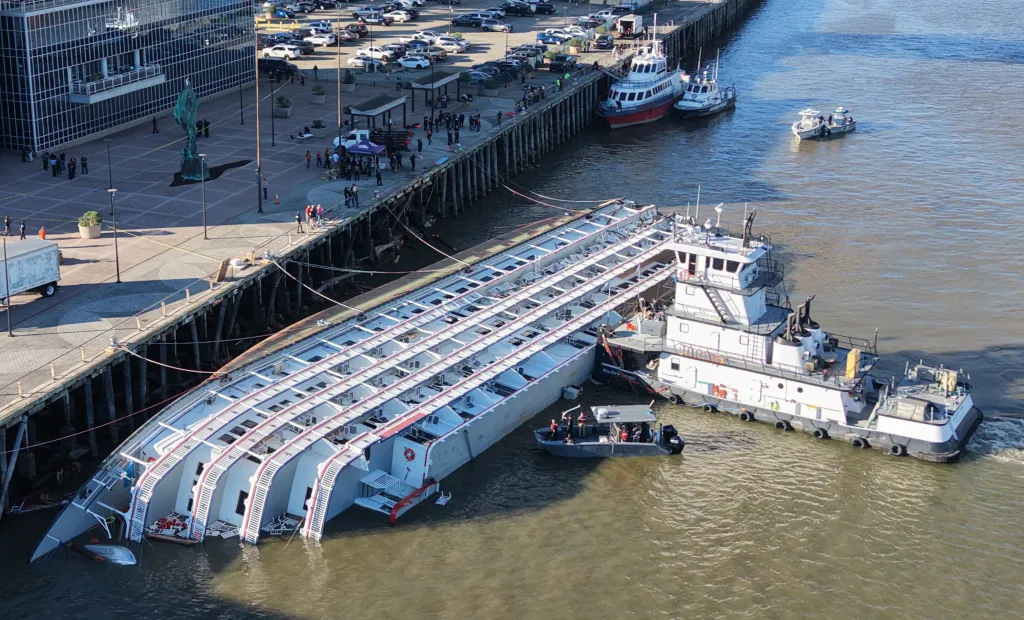
The American Heritage remains overturned near the waterfront, and authorities say removing the vessel could take several weeks.
Before salvage operations can proceed, crews must address approximately 16,000 gallons of fuel aboard the damaged riverboat.
The Coast Guard is coordinating with salvage specialists to manage the operation and reduce the risk of environmental damage.
Meanwhile, the Atlantic Asphalt has been placed under federal control following legal action connected to the incident.
The Port of New Orleans has filed a federal lawsuit seeking compensation for at least $1 million in alleged damage to its terminal, with additional losses potentially expected.
NTSB INVESTIGATION CONTINUES
Federal investigators are continuing to examine the tanker’s mechanical systems, recorded data and crew accounts to determine exactly what happened.
Interviews with crew members from both vessels are part of the investigation.
The NTSB expects to release a preliminary report within approximately 30 days.
For now, authorities have confirmed that a steering malfunction sent the tanker toward the docked cruise ship, but the underlying cause has yet to be established.
What could have become one of the Mississippi River’s deadliest maritime disasters ended without a single reported dєatᩚh.
For the nearly 200 people aboard the American Heritage, however, the terrifying moments when the massive tanker struck their vessel are likely to remain unforgettable.