The items, which a Knox County jury considered before deciding Pike should get the dєatᩚh penalty in 1996, are kept in a vault in the City County Building downtown.
KNOXVILLE, Tenn. — They are reminders of one teen’s terror and another teen’s terrible crime.
A pink sweater with a shoe print on the back, a scuffed green Karizma jacket, dirty Nike sneakers, muddy, slashed jeans — the last things Colleen A. Slemmer, 19, wore before Christa Gail Pike, 18, and her boyfriend, Tadaryl Shipp, 17, beat, tortured, slashed and bludgeoned her the night of Jan. 12, 1995, in a remote spot of the University of Tennessee Agricultural campus.
Pike, now 50, was two months shy of 19 when she m𝑢rdєred Slemmer. It was a heinous, cruel 𝘬iᩚlling, so bad that a Knox County jury decided Pike should be executed for what she’d done.
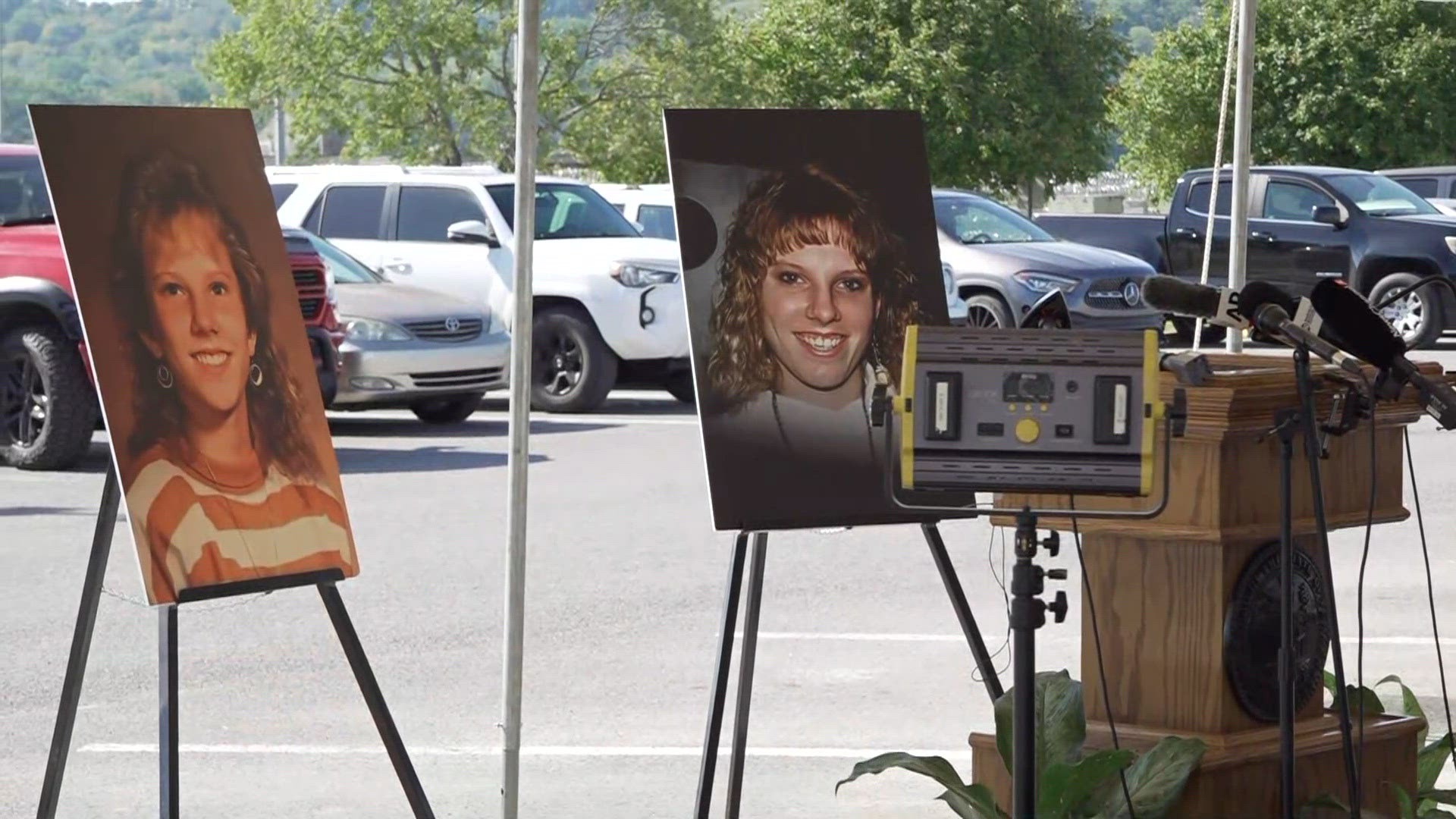
The exє𝔠uti☉n of Christa Pike was originally set for 10 a.m. (CDT) Wednesday, Sept. 30. Pike was set to be put to dєatᩚh for the 1995 murder of Colleen Slemmer.
Except the only woman on Tennessee’s dєatᩚh row survived the state’s attempt Sept. 30 to 𝘬iᩚll her. That night at the state’s Riverbend Maximum Security Institution in Nashville, executioners tried twice — and failed — to 𝘬iᩚll Pike with pentobarbital IVs.
It’s unprecedented.
Now authorities are looking into why they failed. Pike’s lawyers say the IV team likely botched the insertion of lines into her veins, as they warned might happen during a court hearing for Pike in August. It appears the barbiturate went into the tissue of at least one arm, causing a burning, caustic reaction but never 𝘬iᩚlling Pike.
While Pike’s legal team fights to save her life and a curious world marvels that she survived in September, the evidence of what she did sits in a vault deep inside the City County Building in downtown Knoxville.
According to Knox County Criminal Court Clerk Mike Hammond, his office must preserve that evidence in perpetuity because it’s a capital case.

Criminal Court Clerk Mike Hammond talks about evidence retained still in the Pike murder trial.
Whether Pike lives to an old age behind bars or diᩚєs during a second Tennessee exє𝔠uti☉n attempt, her pentagram jewelry, her leather jacket in which she kept a piece of the victim’s skull, her victim’s clothes, one of the murder weapons and a chunk of asphalt recovered from the murder scene will stay in a special bin in the government’s locked basement.
“In a capital case like Christa Pike’s, we will never get rid of it because the law says in those instances you will keep that forever, even if the person is executed,” Hammond said.
Presented to the jury all those decades ago, the items remain proof of why Pike ended up on dєatᩚh row in the first place.
The evidence tells the story. WBIR reviewed it earlier this month.
Pike, Shipp and a friend, Shadolla Peterson, 19, lured Slemmer out to Tyson Park and the nearby Ag campus from the Knoxville Job Corps Center with the invitation to smoke weed. But once they got there, Slemmer realized she was in big trouble.
Pike turned on the Florida woman, falsely accusing her of having designs on her boyfriend. Slemmer insisted she had no interest in Shipp. Pike got angrier.
They assaulted Colleen until she fell to the ground, her clothes becoming soiled. She fought back; the mud on her shoes and pants bear witness.
Her pink sweater offers another glimpse into the violence. There’s at least one shoe imprint — unmistakable — on the back of it.
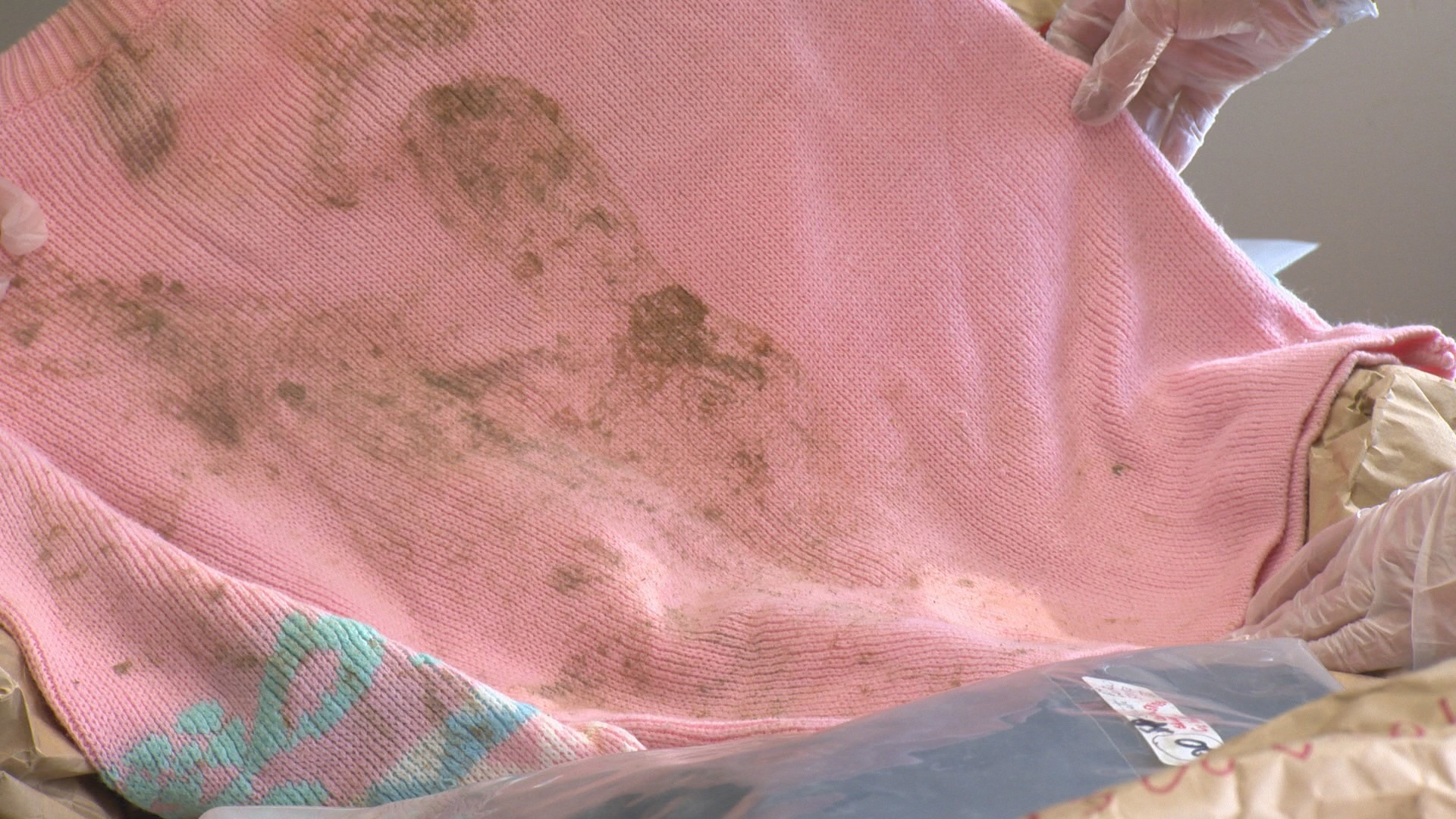
Colleen Slemmer’s pink sweather, retained today by court authorities at the City County Building.
Thirty years later, it still can prompt a grimace. Someone either stepped on Slemmer’s back while she wore it or stepped on it after she took it off.
Pike and Shipp would later acknowledge they made Slemmer take off her coat, sweater and bra. The clothes were found the next morning, strewn around the crime scene. The coat hung in a tree.
By forcing Slemmer to become topless, they tried to discourage her from fleeing. Slemmer still tried to run, but her attackers brought her back. By Pike’s own account to police, Slemmer begged for her life as Pike and Shipp cut her with a box cutter and a small meat cleaver.
The cleaver remains part of the evidence wrapped in a 31-year-old brown bag after all these years. Pike told police she used it to slice into Slemmer’s back.
The killers also brought a box cutter to hurt the victim. Pike would recall they ditched it somewhere later. The jury never saw it, and it’s not on the clerk’s list of evidence today.
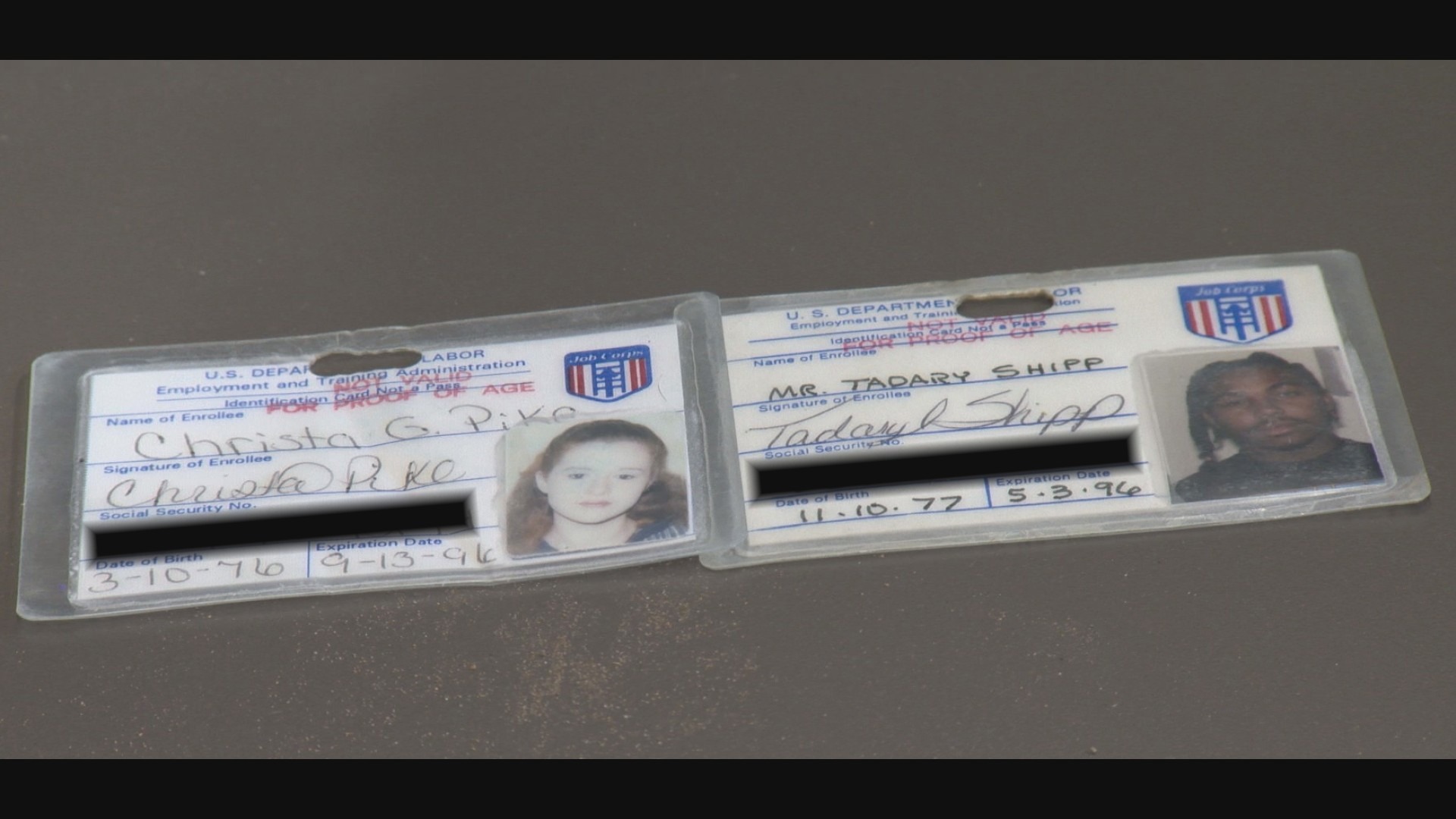
IDs of Pike and boyfriend Tadaryl Shipp taken by authorities after the Jan. 12, 1995, murder of Colleen Slemmer.
The clerk’s office also retains a bloody gag the killers forced into Colleen’s mouth to get her to shut up. Pike complained after the murder that the victim “just kept talking and talking and talking.” Some of Colleen’s hair remains knotted in the cloth.
Investigators also seized several personal items of Pike and Shipp that attest to their state of mind when they m𝑢rdєred Slemmer.
Shipp was fascinated with Satan and Satanism. He kept a book titled “The Satanic Bible” by Anton LeVay that’s considered a foundation of Satanism.
Also seized and presented to the jury at her trial and his: their matching pentagram necklaces.
As they tried to 𝘬iᩚll Slemmer that night, Shipp carved a pentagram into Slemmer’s chest while Pike cut the accompanying circle around the star. All while Slemmer was alive.
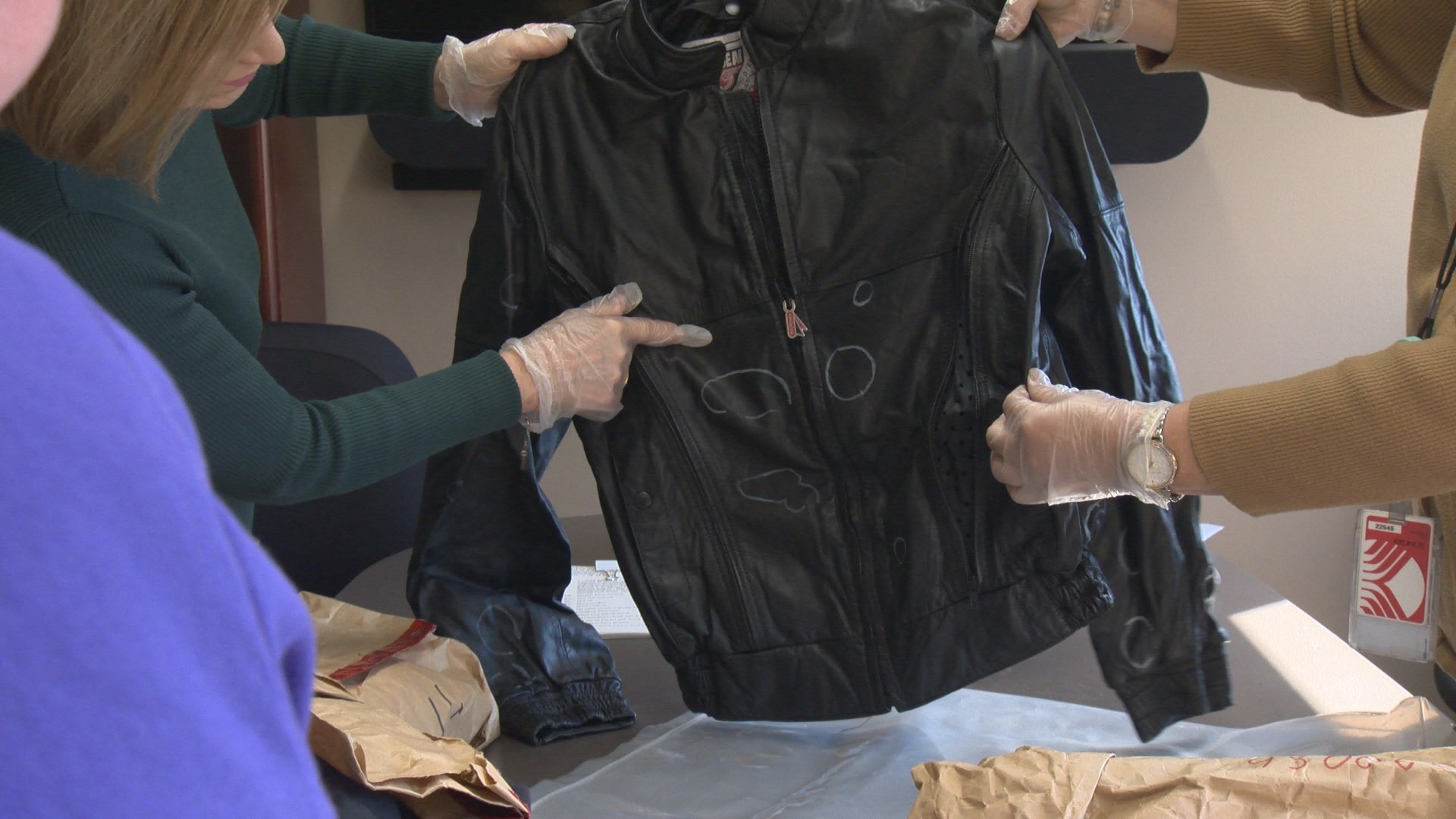
Christa Pike’s leather jacket, where she kept the fragment of Colleen Slemmer’s skull after murdering her.
The office also still has Pike’s black leather jacket. After shattering Slemmer’s skull with a chunk of asphalt, Pike plucked out a piece of the skull as a souvenir. She tucked it in her jacket pocket, and then accidentally left the jacket behind in the office of an administrator at the Job Corps Center on Dale Avenue.
When authorities recovered the jacket several days later, they noted blood spots on the front. And they found the piece of Colleen that Pike had decided to keep for herself.
“You look at it and you say, Wow, how can people do this to another person? But that’s what the courts are for: To take the evidence and determine guilt or innocence,” Hammond said.
PAIN THAT DOESN’T GO AWAY
Until about 2009, the Clerk’s Office also kept Slemmer’s skull and that piece Pike liked to show off before she was arrested. By agreement with the court, all of that was returned to Slemmer’s mother, May Martinez, so the Florida woman could at last have all of her daughter back with her.
Today, Pike is back at the Debra Johnson Rehabilitation Center in Nashville, the same prison where she’s spent most of her life since the murder.
She’s being treated at the prison infirmary for the aftereffects of the pentobarbital that wandered around in her system instead of going straight into her blood.
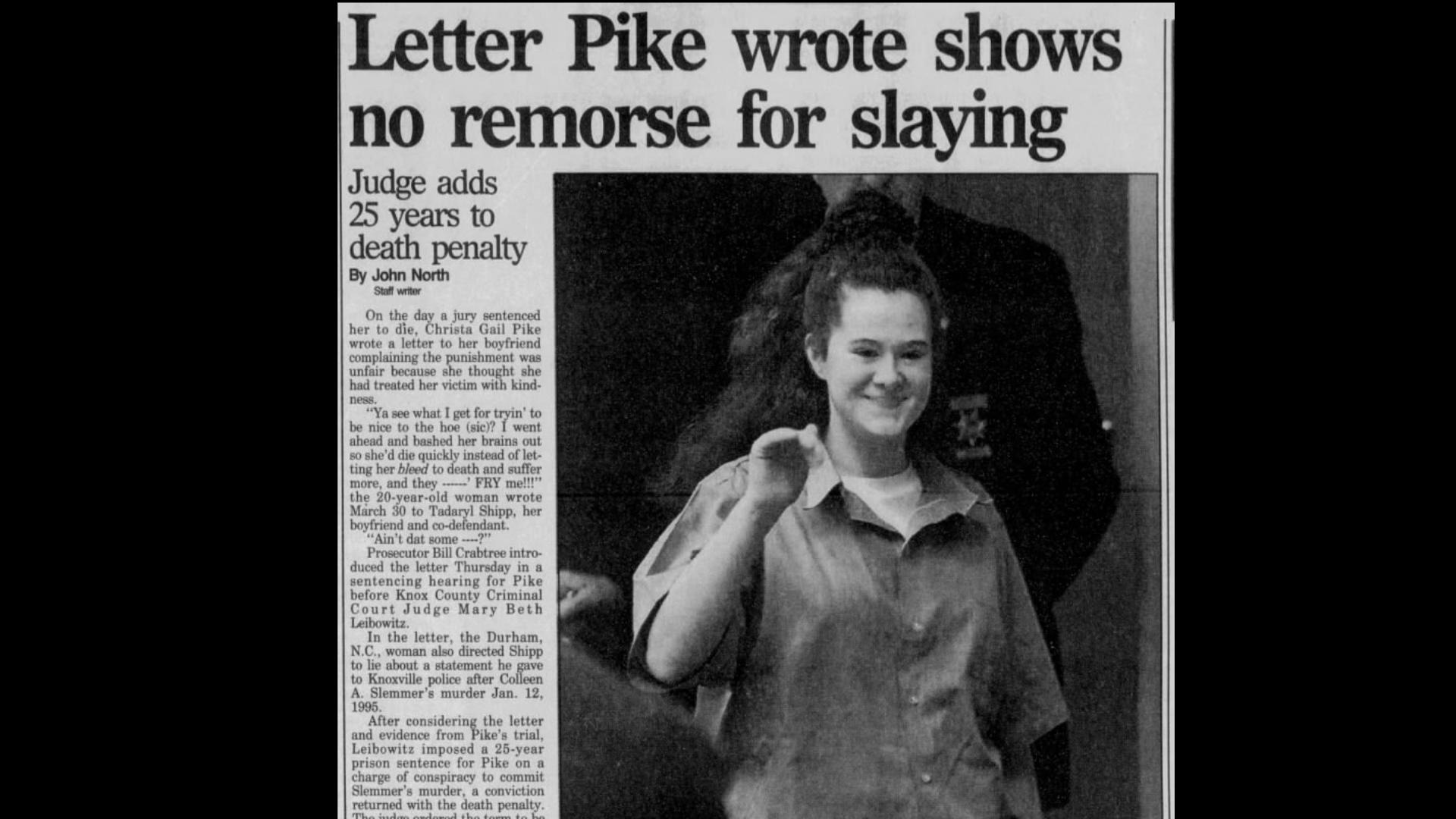
Pike in 1996 at a Knox County hearing. Prosecutors disclosed a note she’d written to her boyfriend complaining about getting the dєatᩚh penalty.
Pike, in a statement released Oct. 30 by her attorneys, said she’s in a lot of pain.
“I don’t know why I survived that night,” her statement reads. “I don’t know what comes next. Some days, finding hope is harder than others.”
She said she continues to “think about my victim’s family and the terrible pain and loss they have endured.”
Martinez, Slemmer’s mother, told WBIR she experiences mєntal pain. She thought she was going to see her daughter’s 𝘬iᩚller put to dєatᩚh Sept. 30. But she’s still alive, Martinez said.
Gov. Bill Lee halted further executions in the state after the botched attempt, and he ordered an independent review into why it happened. It’ll likely be months if not years before the state considers carrying out another exє𝔠uti☉n.
Republican Gov.-elect Marsha Blackburn won a close election last week to take over. After the failed exє𝔠uti☉n, the conservative lawmaker proposed that Tennessee move on from lєthaℓ inje𝔠ti☉n and go back to the electric chair, a more efficient way of taking an inmate’s life.
When Pike was sentenced back in March 1996, that was how the state carried out capital punishment. She had the option of picking the electric chair ahead of the Sept. 30 exє𝔠uti☉n date. She declined it.