Woman in Iconic Vietnam War Photograph Receives Her Father’s POW Bracelet 53 Years Later in Emotional Surprise
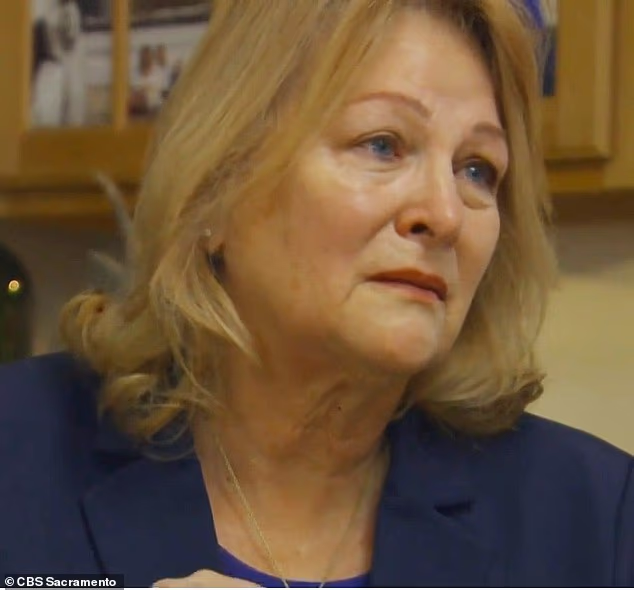
For more than five decades, Lorrie Kitching’s family kept the memory of one extraordinary day in American history. But she never expected that a small metal bracelet, lost for years, would one day find its way back to her hands.
Kitching was just 15 years old in 1973 when her father, US Air Force Lieutenant Colonel Robert Stirm, returned home after spending more than five years as a prisoner of war in North Vietnam.
Their emotional reunion at Travis Air Force Base in California was captured in a photograph that would become one of the most recognizable images of the Vietnam War.
Titled Burst of Joy, the Pulitzer Prize-winning photograph shows Stirm walking toward his family as his children rush to embrace him. Kitching, then a teenager, is seen at the front of the group, her arms outstretched as she runs toward her father.
The photograph was taken by Associated Press photographer Slava “Sal” Veder on March 17, 1973, documenting a moment of overwhelming relief after years of uncertainty.
Now, 53 years later, Kitching has received another deeply personal reminder of her father’s wartime ordeal: the POW bracelet that once carried his name.
A stranger discovers a bracelet with a remarkable history
The unexpected reunion began after Mary Kay Potyraj, a woman from Michigan, discovered the bracelet while sorting through the belongings of her late husband, Rob.
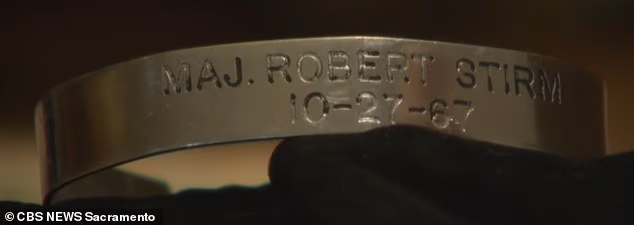
The bracelet was engraved with Stirm’s name and military details. It had originally been made as part of a nationwide campaign to keep American prisoners of war in Vietnam in the public consciousness.
Rather than simply keeping the item or discarding it, Potyraj decided to find the family of the serviceman whose name appeared on it.
She researched Stirm’s story and eventually tracked down his relatives.
Potyraj explained that she wanted to establish whether the family would appreciate having the bracelet returned.
In a letter accompanying the package, she wrote: “Dear Lorrie, so happy to reunite you with your father’s POW bracelet.”
For Kitching, the arrival was almost impossible to believe.
“I was like, ‘Oh, this is unbelievable,’” she recalled, describing her reaction to the unexpected gift.
She later told CBS13 that the bracelet meant far more than its physical value.
“This isn’t just a piece of metal. It represents so much more,” she said.
The bracelet carries memories of years of uncertainty
POW bracelets first became popular in 1970 through a campaign organized by American college students seeking to draw attention to US military personnel held captive or missing in Vietnam.
Each bracelet carried the name of a serviceman and the date he had been captured. People who wore them promised to keep doing so until the individual returned home.
Stirm had been shot down over Hanoi on October 27, 1967. He spent more than five years in captivity before being released in 1973.
For his daughter, the bracelet brought back memories of the fear surrounding his disappearance and the long wait for his return.
Kitching reflected on what the period had meant to her, saying: “It’s the day I lost my Dad, and I didn’t know if he was going to be coming home.”
The return of the bracelet therefore connected two moments separated by more than half a century: the painful uncertainty of 1967 and the joyful family reunion in 1973.
A photograph that became part of Vietnam War history
The photograph of Stirm’s homecoming, Burst of Joy, became a powerful symbol of the return of American prisoners of war.
It captured a rare moment of happiness after years of separation, and its emotional impact helped make it one of the defining photographs of the postwar period.
Stirm later continued his military career and lived to see the photograph become an enduring part of American history.
He died in 2025 at the age of 92 and was buried at Arlington National Cemetery.
For Kitching, the bracelet’s return is a deeply personal tribute to a father whose experience was witnessed by millions through a single photograph.
And for Potyraj, the discovery became an opportunity to reunite a family with a piece of its history.
More than 53 years after Stirm walked toward his waiting children, another piece of his story has finally come home.