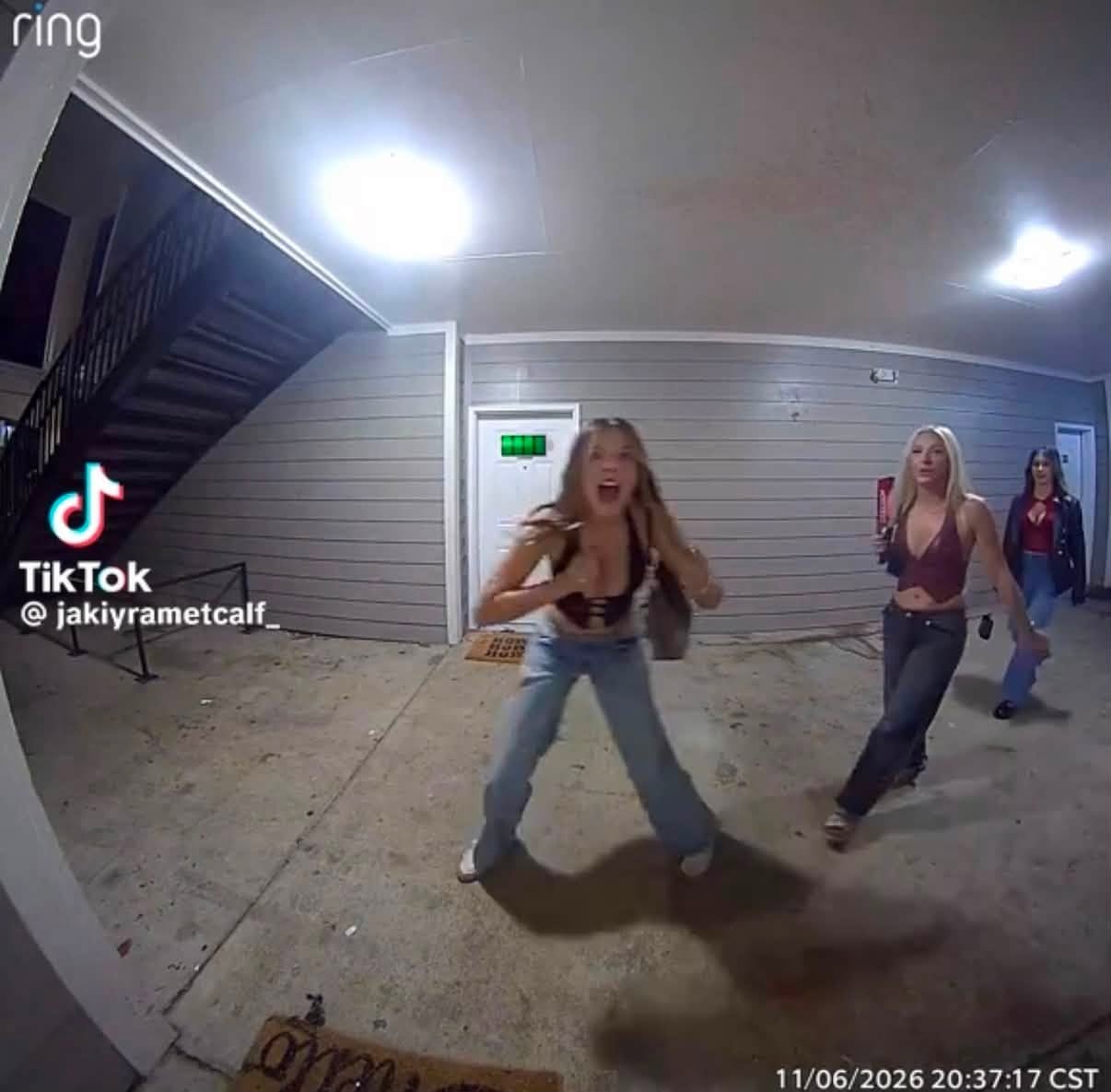
In a disturbing incident that has ignited national fury, University of Mississippi freshman Jakiyra Metcalf captured three young women on her Ring doorbell camera making overtly racist monkey noises and gestures right outside her apartment door. The Black student shared the footage on TikTok on November 6, 2026, tagging Ole Miss and demanding answers: “What do we have to say about this??” The video, timestamped around 8:37 p.m., quickly amᴀssed millions of views and sparked widespread condemnation of alleged racial harᴀssment on campus.
The clip shows three women walking past the apartment Metcalf shares with two other Black roommates. Two of them appear to beat their chests, imitate primate sounds, and gesture mockingly toward the camera, while the third trails behind without joining in. Metcalf later revealed in comments that the women are her upstairs neighbors—with no prior confrontation. “We just found out they are our upstairs neighbors,” she posted, underscoring the betrayal of feeling unsafe in her own home. Her family has turned the footage over to university administrators and is pressing for accountability.
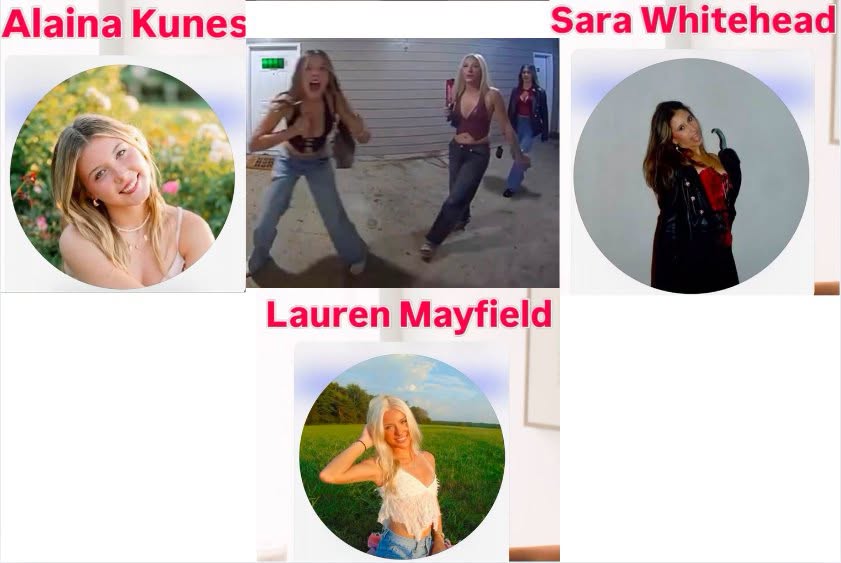
Names circulating widely online—Lauren Mayfield, Sara Whitehead, and Alaina Kunes—have been linked to the women via social media posts and Instagram profiles, though these identifications remain unofficial and unverified by authorities. The Iota Omega chapter of Alpha Phi at Ole Miss swiftly denied any connection, stating the named individuals “are not members of Alpha Phi and have never been affiliated with our organization.” The sorority claimed confusion with members of similar names, condemned racism, and said it is working with the university’s Fraternity and Sorority Life office to correct the misinformation while noting the distress caused to those wrongly identified.

Former NFL star and commentator Emmanuel Acho delivered a blistering rebuke, calling the act a deliberate choice: “Racism is not an accident… It is a conscious, active decision to weaponize history, pain, and systemic degradation against another human being simply because of the color of their skin… why choose to be racist?” His words resonated as users flooded comments demanding expulsions, hate crime probes, and emails to Ole Miss officials including the chancellor and Equal Opportunity office.
This is no isolated lapse. It eerily echoes a May 2024 campus incident in which a white student was filmed making monkey noises toward a Black protester during a demonstration; that individual was removed from his fraternity, and the university launched a conduct investigation. Ole Miss’s silence as of November 8—no public statement confirming enrollment status, investigation, or discipline—only fuels suspicions of inadequate response to racism that makes Black students feel targeted even at their doorstep.
Home should be a sanctuary, not a stage for dehumanizing mockery. When neighbors—fellow students—allegedly deploy one of the oldest, most degrading racial tropes with laughter and zero provocation, it exposes a deeper failure: the persistence of casual bigotry in spaces meant for growth and equality. Social media’s swift identification and pressure campaign highlight public intolerance for such behavior, yet true justice requires insтιтutional action, not just viral heat. No police involvement has been reported, leaving the matter in university hands.

Jakiyra Metcalf, a Class of 2030 student simply trying to live and learn, has forced a reckoning. Ole Miss must investigate thoroughly, protect its students, and demonstrate that racist harᴀssment carries real consequences. Anything less betrays the promise of higher education and leaves every student of color looking over their shoulder. The footage is damning evidence; the demand for answers is clear. The university’s next move will define whether this is a moment of accountability or another chapter of denial. Community members with information are urged to contact Ole Miss administrators immediately.